Nieuws
German farmers leading the race
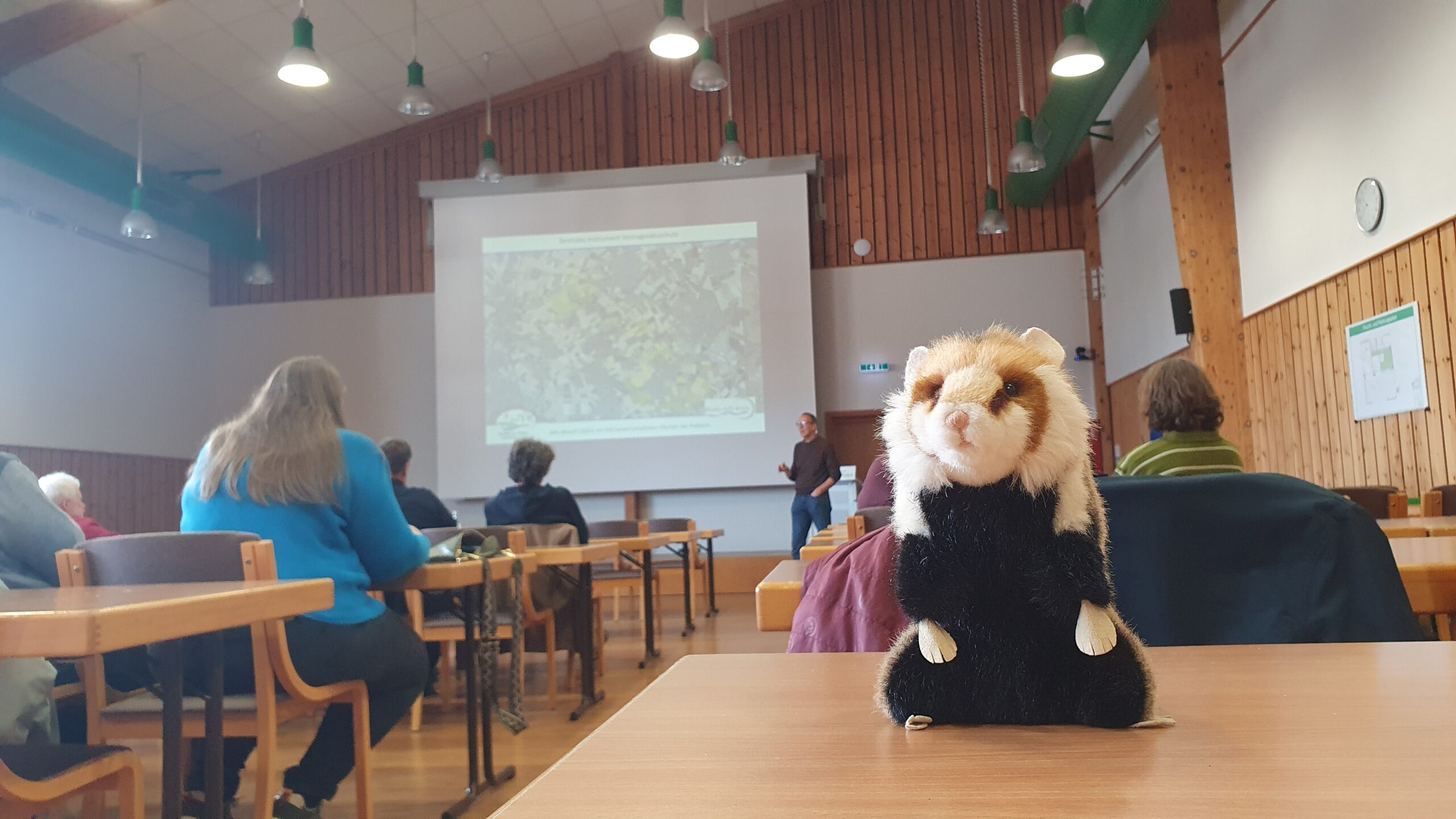
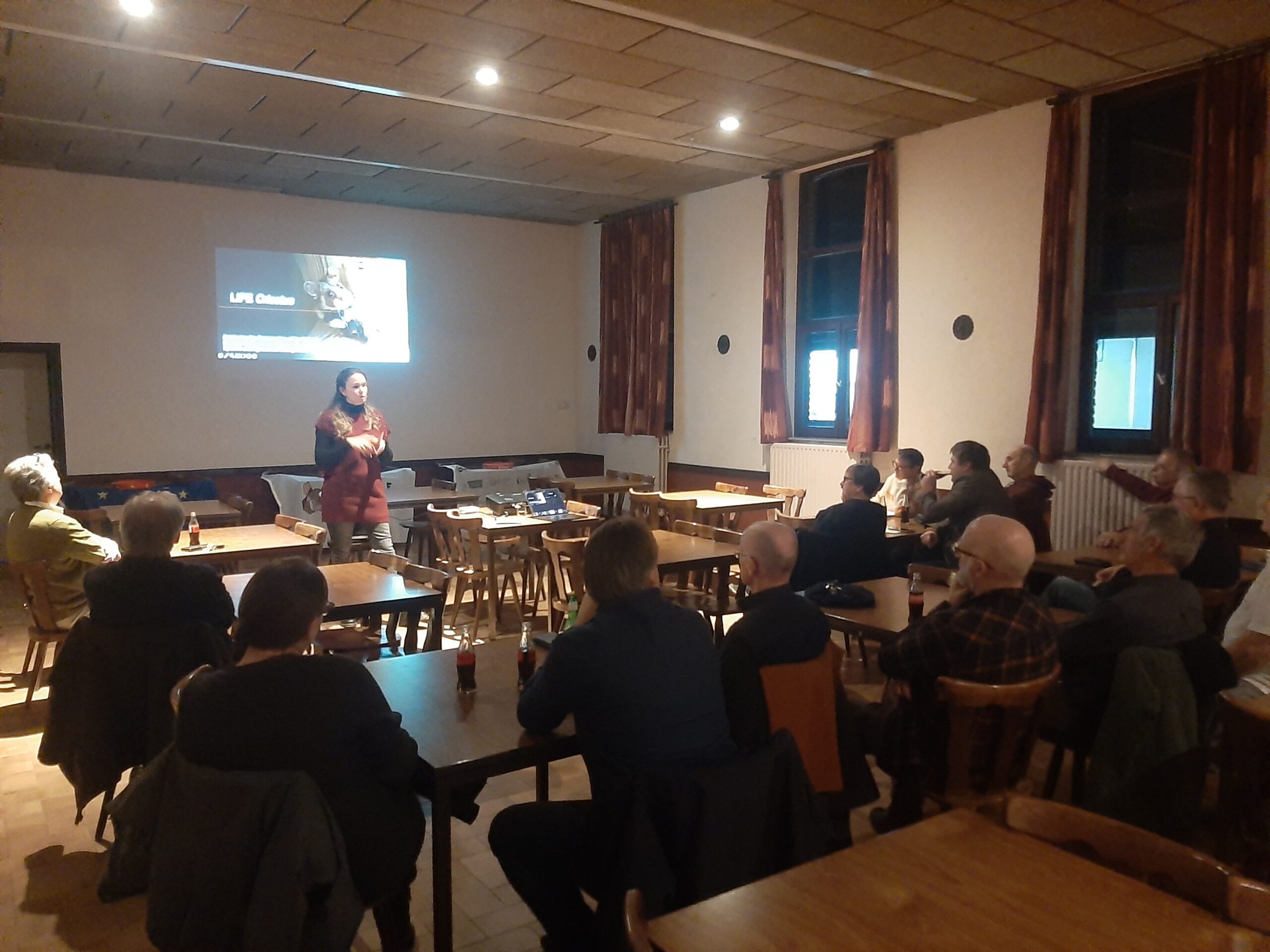
On 12 December 2025, also our German partners Biostation Bonn/Rhein-Erft and Biostation Rhein-Kreis Neuss hosted the first LIFE Cricetus meeting with farmers from the hamster areas around Pulheim and Rommerskirchen.
During the meeting, the latest figures and developments of the local European hamster populations were shared, followed by an introduction to the LIFE Cricetus project. This led to an open and constructive discussion with everyone attending.
Although the number of farmers currently implementing agri-environment-climate measures (AECMs) in the region remains limited, the existing measures are spread across a relatively large and well-distributed area. This landscape-level approach has already proven its value: it has enabled the successful maintenance of hamster populations following the release of captive-bred individuals.
LIFE Cricetus aims to build on these foundations by strengthening cooperation with farmers, expanding participation, and improving the effectiveness of existing measures for the benefit of the European hamster, farmland biodiversity, and resilient farming systems.
Joining forces with farmers for the European hamster
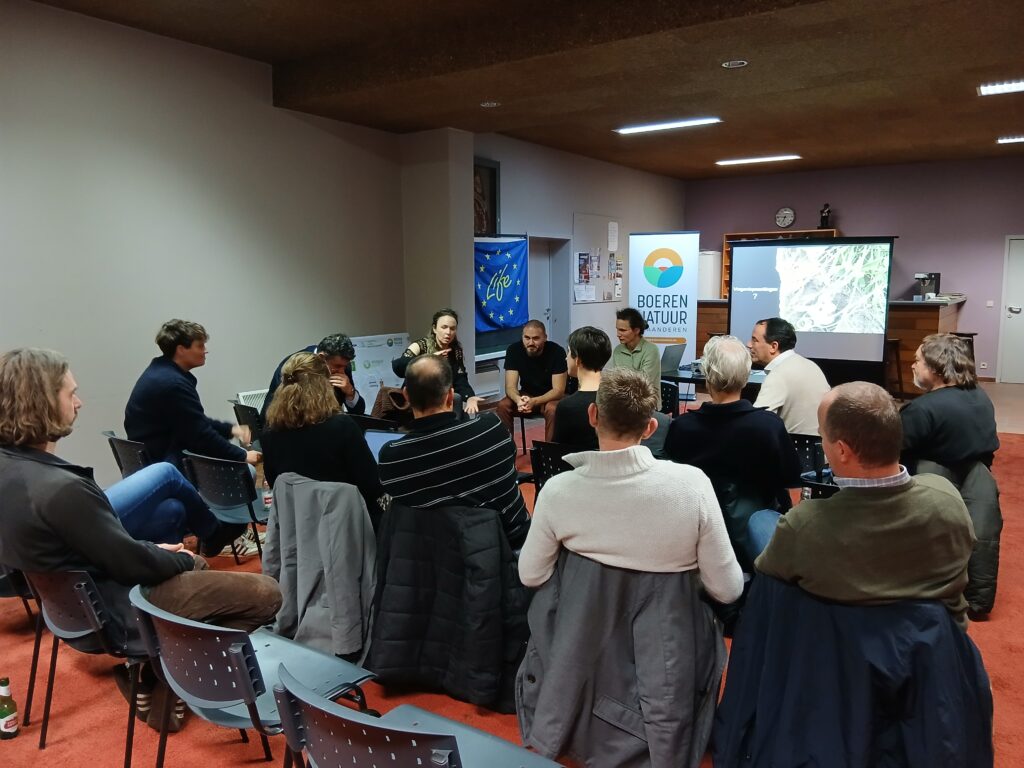
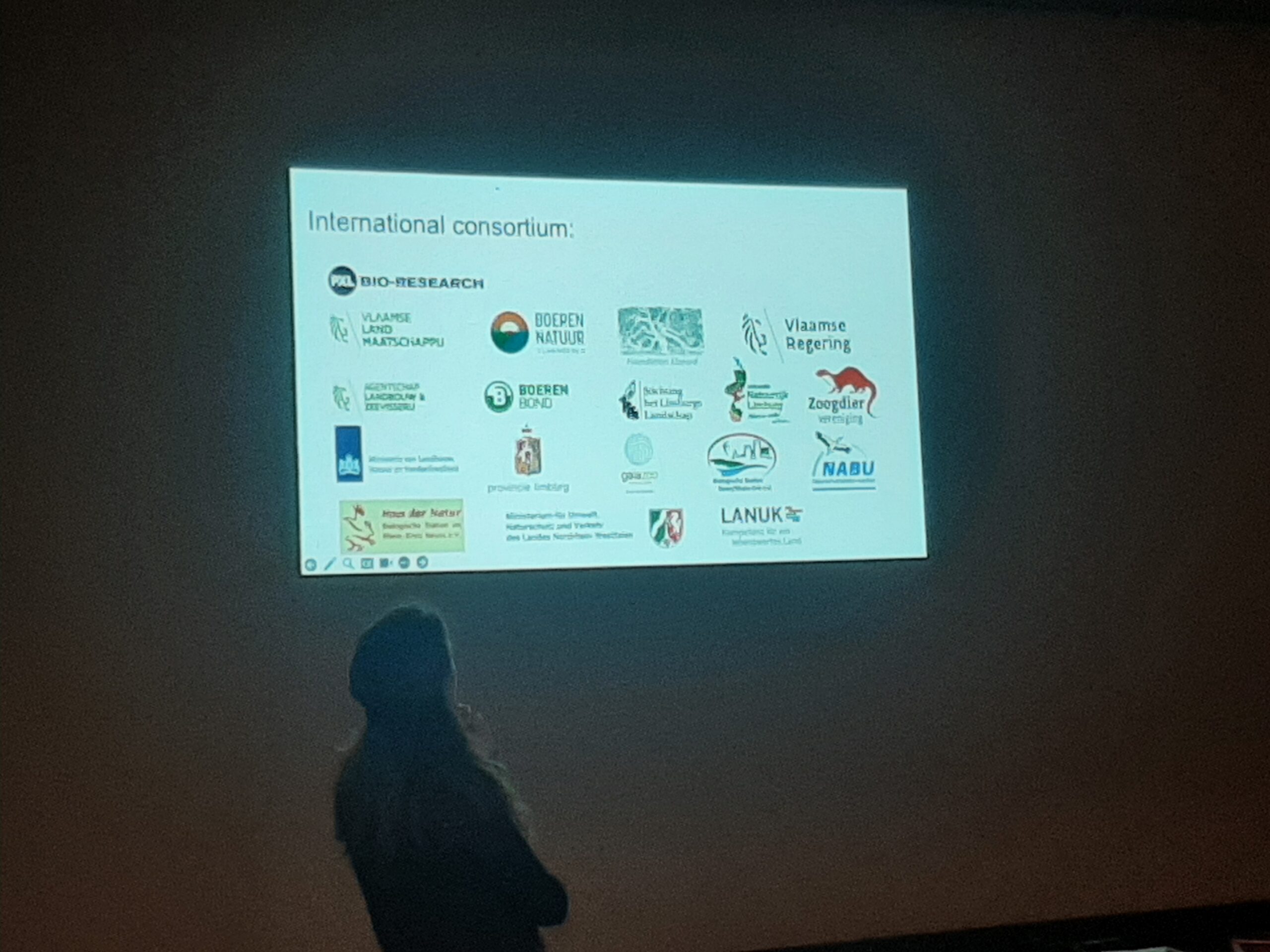
At a recent info session for the LIFE Cricetus project in Tongeren-Borgloon, farmers, partners and local authorities can together to discuss how to protect the hamster in Flanders (Belgium).
Representatives of PXL BIO, Boerennatuur and Vlaamse Landmaatschappij (VLM) presented the project’s goals and first steps. They emphasised the project’s bottom-up approach and the ambition to give farmers a central role in shaping measures and policies.
Protecting the hamster not only benefits biodiversity, but also supports farmers by improving soil quality and reducing dependence on fertilisers. As an umbrella species, the presence of the hamster is an indicator of a healthy and diverse agricultural landscape.
The presentations led to an open and constructive discussion, with farmers sharing their experiences and exploring solutions, an encouraging sign for future cooperation.
Together, we can show that nature and agriculture truly go hand in hand.
LIFE Cricetus x Natuurpunt Tongeren-Borgloon
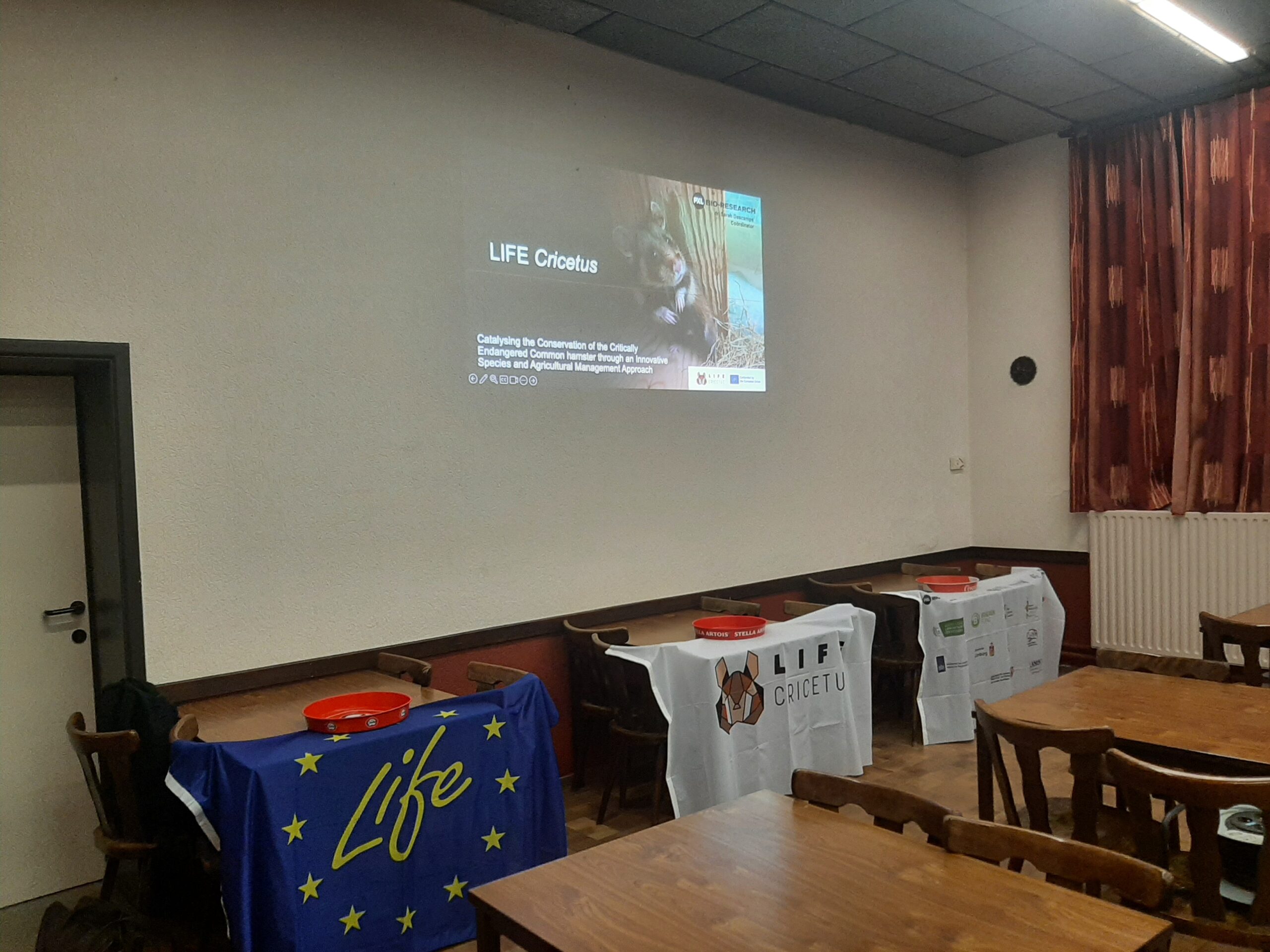
Sarah Descamps, coördinator of the LIFE Cricetus project, had opportunity to present the project to the enthusiastic volunteers of Natuurpunt Tongeren-Borgloon. Their long-standing commitment to the local nature conservation created the perfect setting to discuss one of the core challenges of our project: the perceived contradiction between nature and farming.
In reality, the future of both is tightly connected.
The LIFE Cricetus project is built on the belief that we need to transition toward an agricultural landscape where nature and economic viability can reinforce one another. This is only possible through genuine collaboration and a shared understanding between sectors that have often worked in parallel rather than together.
A healthier landscape doesn’t only benefit the critically endangered European hamster, but also:
• pollinators,
• farmland birds,
• soil biodiversity,
• and ultimately the farmers themselves, by reducing dependence on chemical inputs and large agrifirms.We are grateful for the warm welcome by Natuurpunt Tongeren-Borgloon and look forward to working together toward a landscape where wildlife and agriculture can thrive side by side.
More updates on LIFE Cricetus will follow soon.
Research and Conservation Symposium, GAIA ZOO
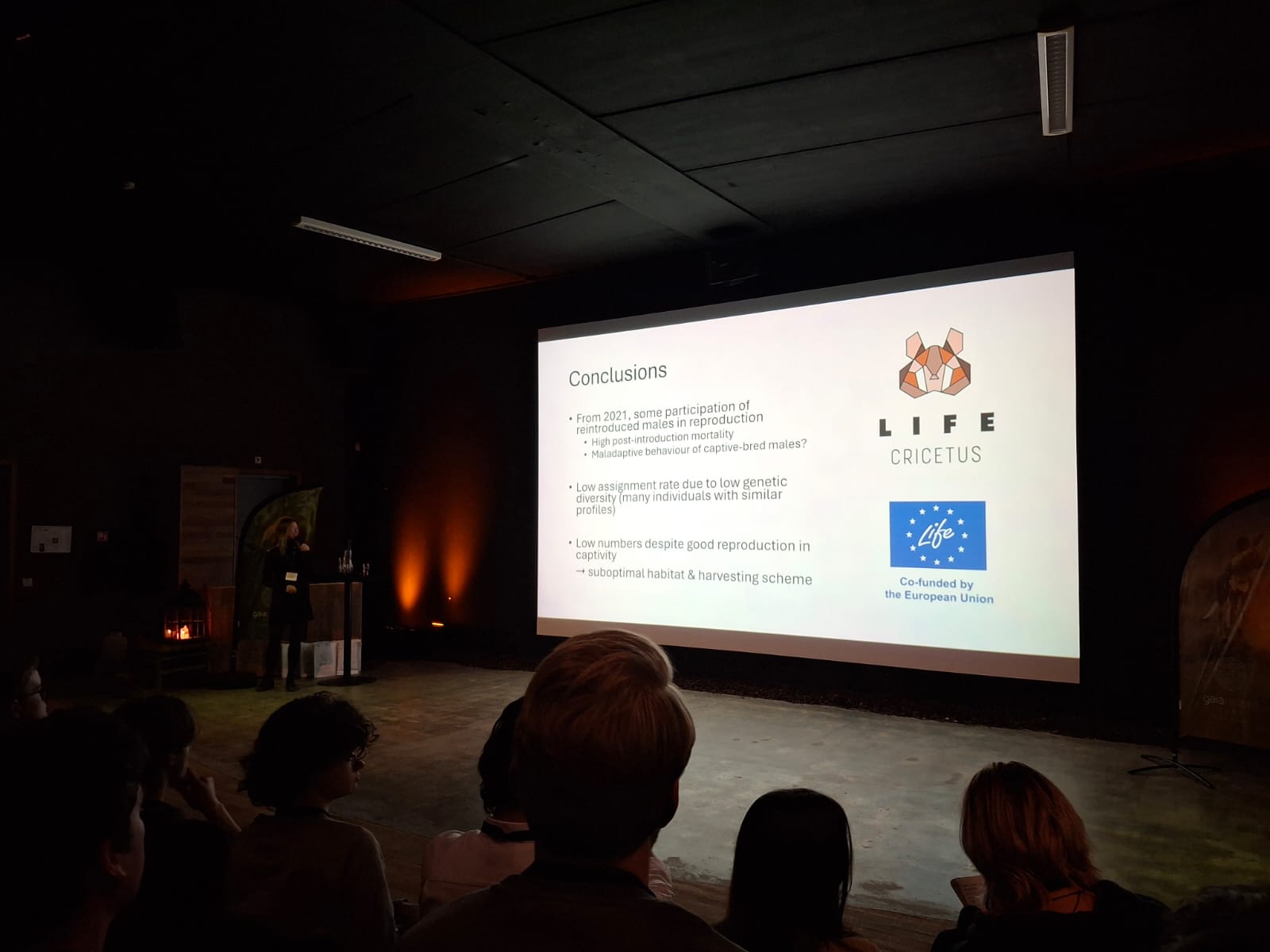
The Research and Conservation Symposium, hosted by GAIA-ZOO, brought together experts, researchers, and practitioners working across a variety of species and conservation challenges.
As part of the programme, our colleague Leona Milec (PXL Bio-Research, lead beneficiary of LIFE Cricetus) presented her work on parentage analysis of wild-caught common hamsters in Widooie.
This research is an important piece of the broader LIFE Cricetus project.
By understanding family relationships, genetic diversity, and dispersal patterns within the remaining wild population, we can better assess its long-term viability and make informed decisions on habitat management, release strategies, and population reinforcement.
A big thank-you to GAIA-ZOO for organizing a symposium that brought together such a wide range of conservation perspectives — and for providing a platform to highlight the work being done for the critically endangered common hamster within the LIFE Cricetus project.
Korenwolfavond
Protecting the European hamster (Cricetus cricetus) goes hand in hand with creating a healthy, diverse farmland environment not only for the hamster, but for many other farmland species that depend on it.
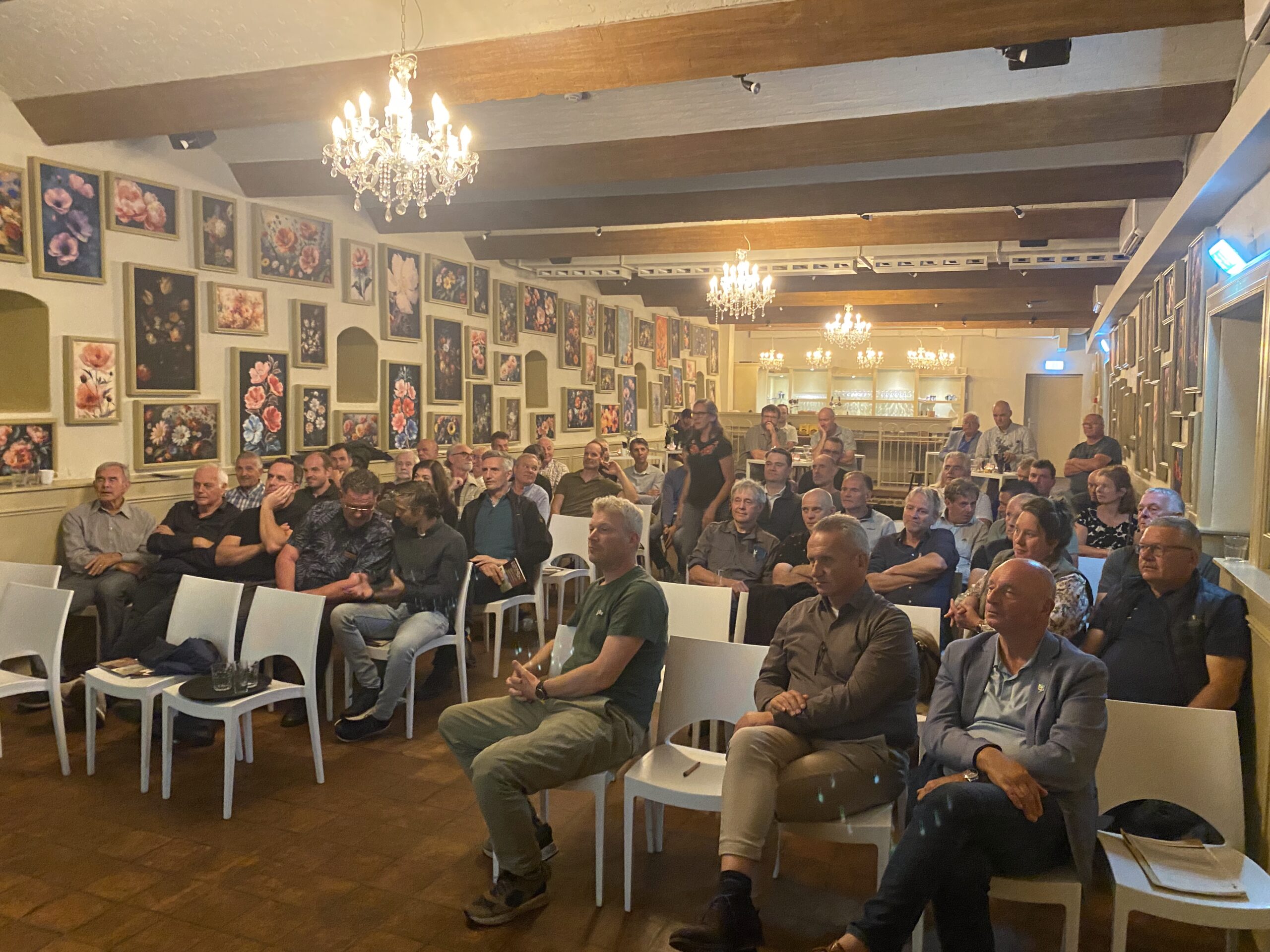
During the recent Korenwolfavond organised by Natuurrijk Limburg, partners, conservationists, and farmers came together to share the progress made in protecting the hamster in the Netherlands.
Natuurrijk Limburg has been working for years to improve the agricultural landscape and is also a proud partner in our LIFE Cricetus project, which started earlier this year.
The LIFE Cricetus project coordinator attended the event and presented the project’s goals and first steps. After some curiosity and questions, the farmers in attendance showed great engagement and interest, a promising sign for future collaboration!
Together, we can build a landscape where both nature and agriculture thrive.
Nieuws
German farmers leading the race
On 12 December 2025, also our German partners Biostation Bonn/Rhein-Erft and Biostation Rhein-Kreis Neuss hosted the first LIFE Cricetus meeting with farmers from the hamster areas around Pulheim and Rommerskirchen.
During the meeting, the latest figures and developments of the local European hamster populations were shared, followed by an introduction to the LIFE Cricetus project. This led to an open and constructive discussion with everyone attending.
Although the number of farmers currently implementing agri-environment-climate measures (AECMs) in the region remains limited, the existing measures are spread across a relatively large and well-distributed area. This landscape-level approach has already proven its value: it has enabled the successful maintenance of hamster populations following the release of captive-bred individuals.
LIFE Cricetus aims to build on these foundations by strengthening cooperation with farmers, expanding participation, and improving the effectiveness of existing measures for the benefit of the European hamster, farmland biodiversity, and resilient farming systems.
Joining forces with farmers for the European hamster
At a recent info session for the LIFE Cricetus project in Tongeren-Borgloon, farmers, partners and local authorities can together to discuss how to protect the hamster in Flanders (Belgium).
Representatives of PXL BIO, Boerennatuur and Vlaamse Landmaatschappij (VLM) presented the project’s goals and first steps. They emphasised the project’s bottom-up approach and the ambition to give farmers a central role in shaping measures and policies.
Protecting the hamster not only benefits biodiversity, but also supports farmers by improving soil quality and reducing dependence on fertilisers. As an umbrella species, the presence of the hamster is an indicator of a healthy and diverse agricultural landscape.
The presentations led to an open and constructive discussion, with farmers sharing their experiences and exploring solutions, an encouraging sign for future cooperation.
Together, we can show that nature and agriculture truly go hand in hand.
LIFE Cricetus x Natuurpunt Tongeren-Borgloon
Sarah Descamps, coördinator of the LIFE Cricetus project, had opportunity to present the project to the enthusiastic volunteers of Natuurpunt Tongeren-Borgloon. Their long-standing commitment to the local nature conservation created the perfect setting to discuss one of the core challenges of our project: the perceived contradiction between nature and farming.
In reality, the future of both is tightly connected.
The LIFE Cricetus project is built on the belief that we need to transition toward an agricultural landscape where nature and economic viability can reinforce one another. This is only possible through genuine collaboration and a shared understanding between sectors that have often worked in parallel rather than together.
A healthier landscape doesn’t only benefit the critically endangered European hamster, but also:
• pollinators,
• farmland birds,
• soil biodiversity,
• and ultimately the farmers themselves, by reducing dependence on chemical inputs and large agrifirms.We are grateful for the warm welcome by Natuurpunt Tongeren-Borgloon and look forward to working together toward a landscape where wildlife and agriculture can thrive side by side.
More updates on LIFE Cricetus will follow soon.
Research and Conservation Symposium, GAIA ZOO
The Research and Conservation Symposium, hosted by GAIA-ZOO, brought together experts, researchers, and practitioners working across a variety of species and conservation challenges.
As part of the programme, our colleague Leona Milec (PXL Bio-Research, lead beneficiary of LIFE Cricetus) presented her work on parentage analysis of wild-caught common hamsters in Widooie.
This research is an important piece of the broader LIFE Cricetus project.
By understanding family relationships, genetic diversity, and dispersal patterns within the remaining wild population, we can better assess its long-term viability and make informed decisions on habitat management, release strategies, and population reinforcement.
A big thank-you to GAIA-ZOO for organizing a symposium that brought together such a wide range of conservation perspectives — and for providing a platform to highlight the work being done for the critically endangered common hamster within the LIFE Cricetus project.
Korenwolfavond
Protecting the European hamster (Cricetus cricetus) goes hand in hand with creating a healthy, diverse farmland environment not only for the hamster, but for many other farmland species that depend on it.
During the recent Korenwolfavond organised by Natuurrijk Limburg, partners, conservationists, and farmers came together to share the progress made in protecting the hamster in the Netherlands.
Natuurrijk Limburg has been working for years to improve the agricultural landscape and is also a proud partner in our LIFE Cricetus project, which started earlier this year.
The LIFE Cricetus project coordinator attended the event and presented the project’s goals and first steps. After some curiosity and questions, the farmers in attendance showed great engagement and interest, a promising sign for future collaboration!
Together, we can build a landscape where both nature and agriculture thrive.