News
End of the first field season
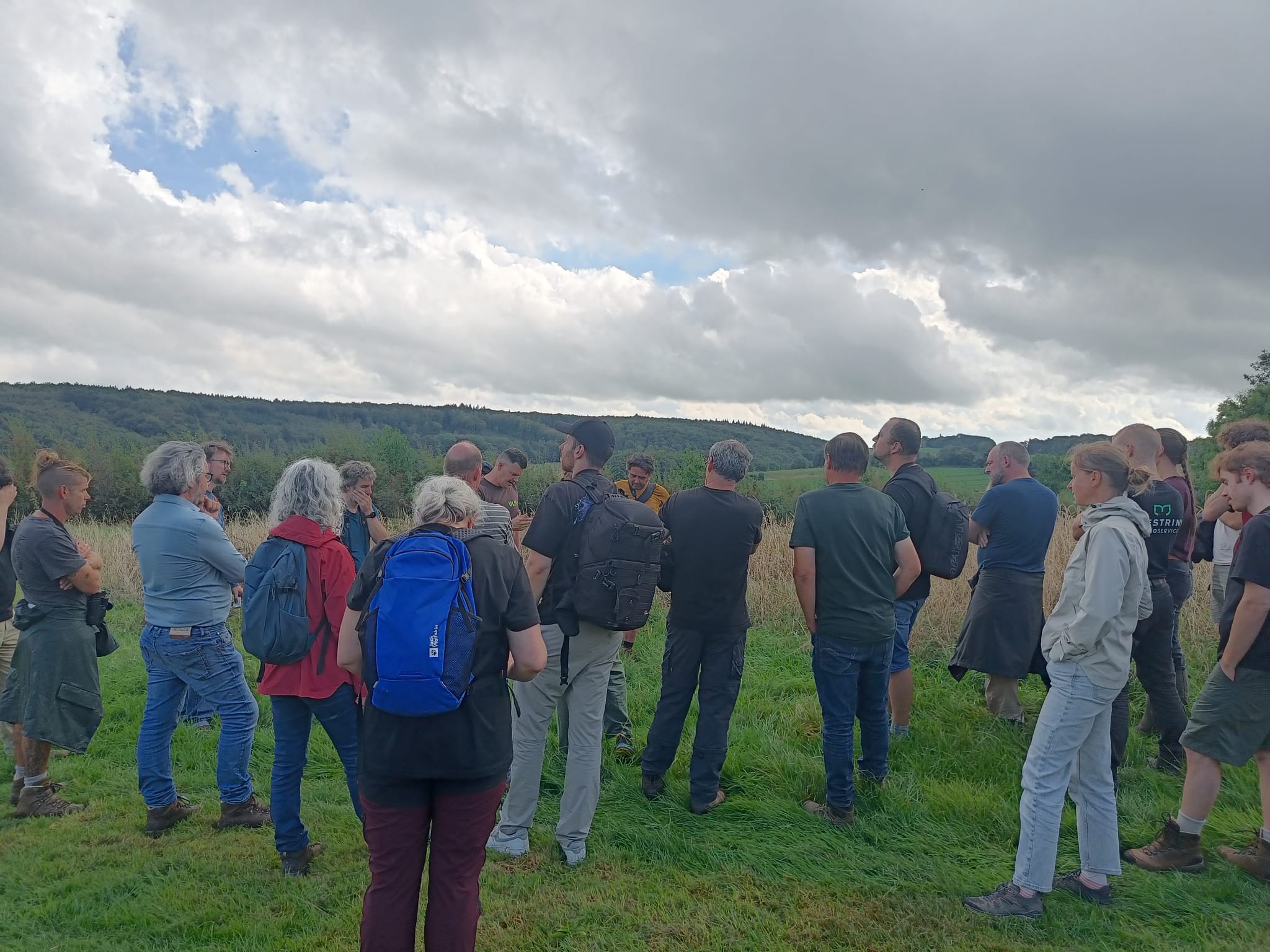
Over the past few months, our LIFE Cricetus partners have been busy collecting biodiversity data across agricultural landscapes in the Rhein-Erft-Kreis region of Germany. With the field season now coming to an end, it’s time to take a first look at the work carried out and the data collected.
🔍 Monitoring biodiversity in agricultural landscapes
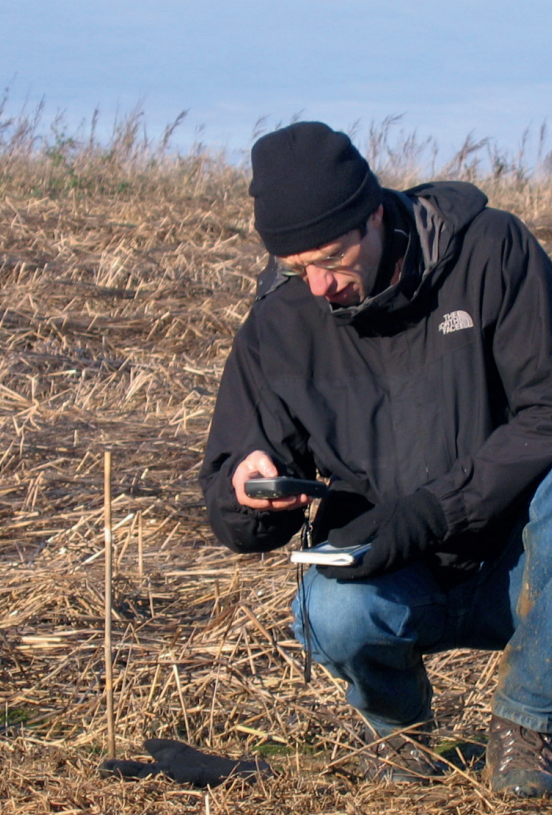
Throughout the field season, different surveys were conducted to assess biodiversity and environmental conditions in the project area. These included European hamster burrow monitoring, pollinator surveys along transects, farmland bird surveys and the use of environmental loggers.
Along the way, our field teams also encountered plenty of interesting wildlife and landscapes. The photos offer a small glimpse into their work:
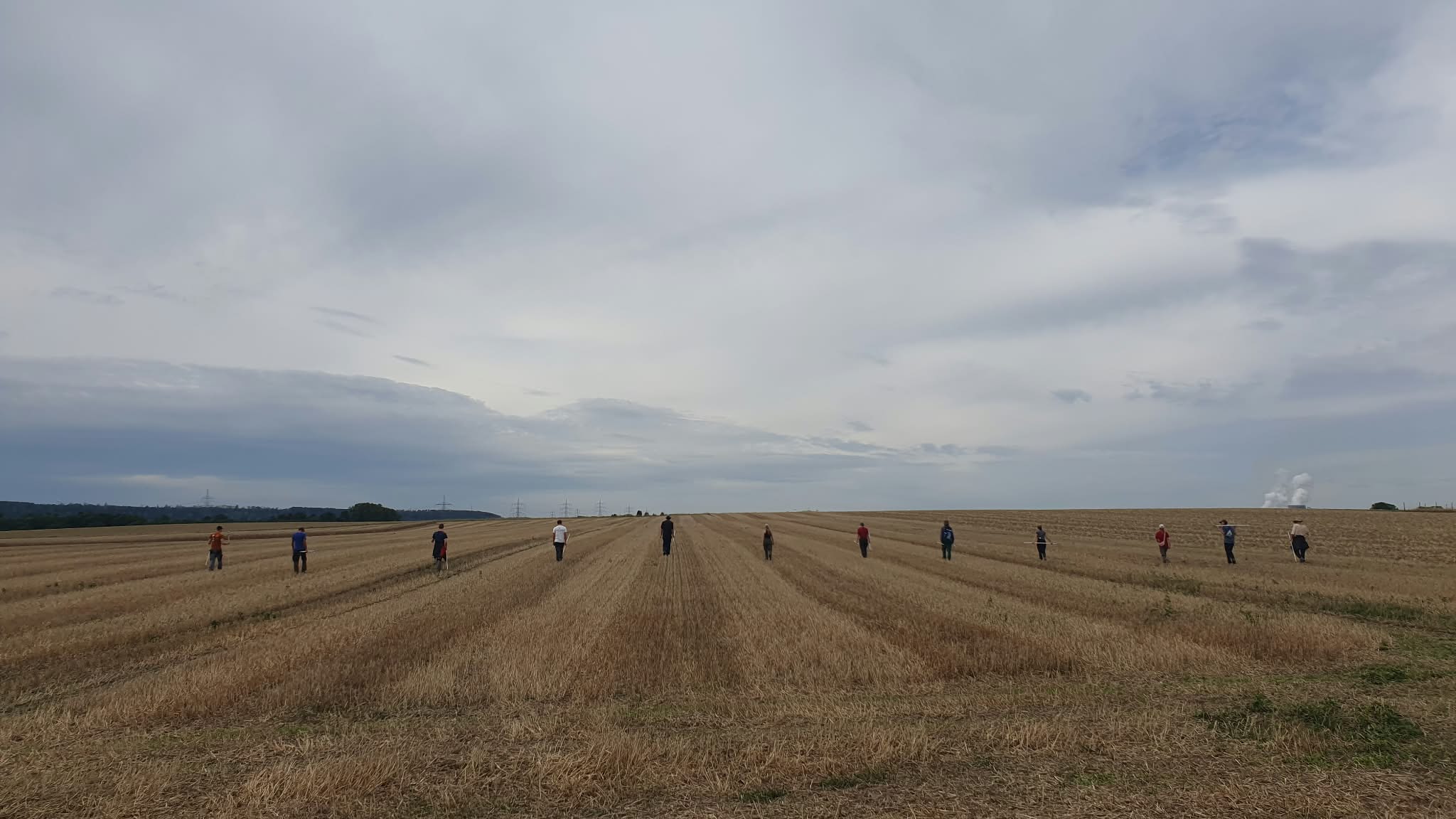
👥 Our field team during European hamster burrow monitoring
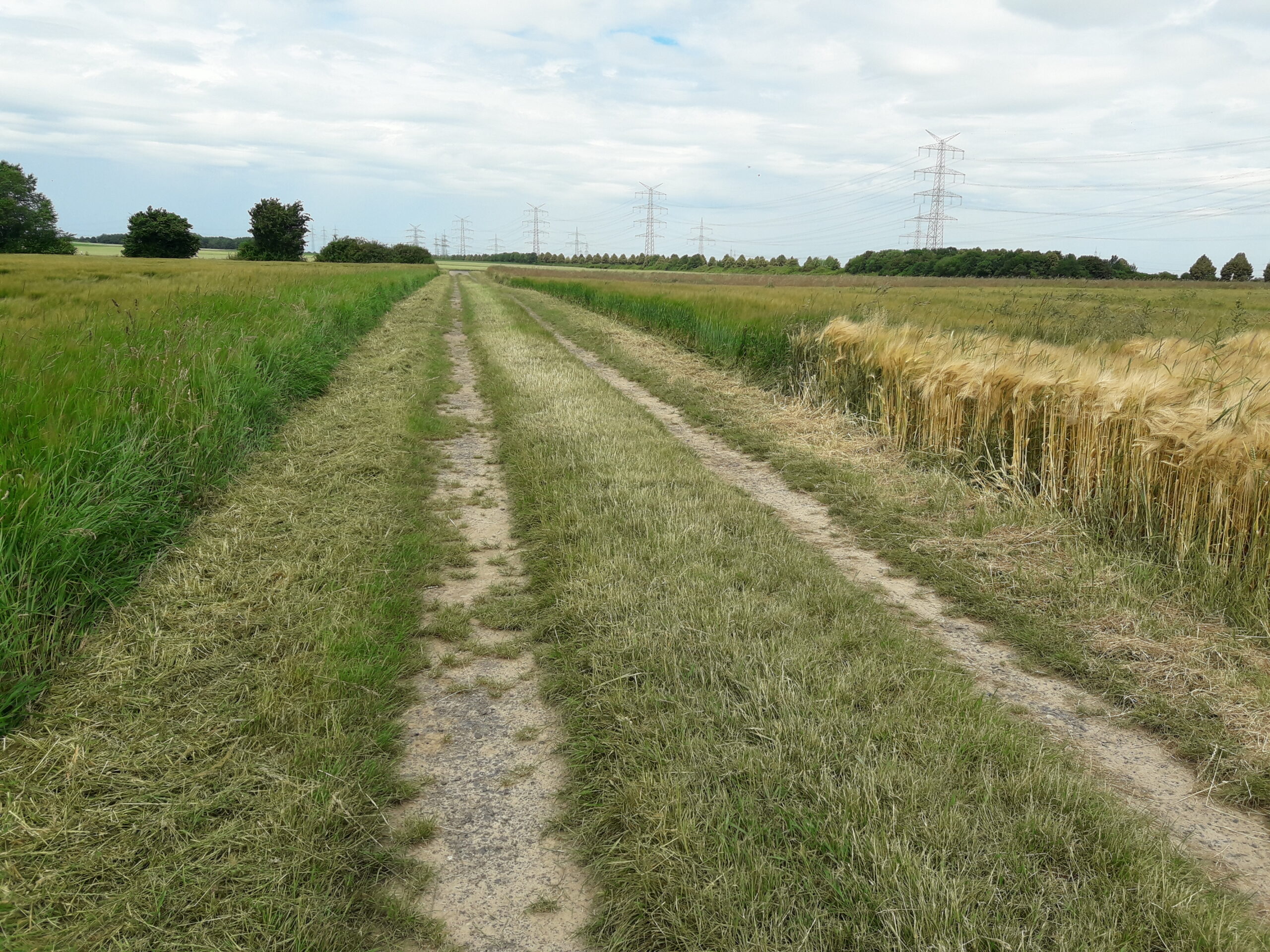
🌱 A transect used during the pollinator survey
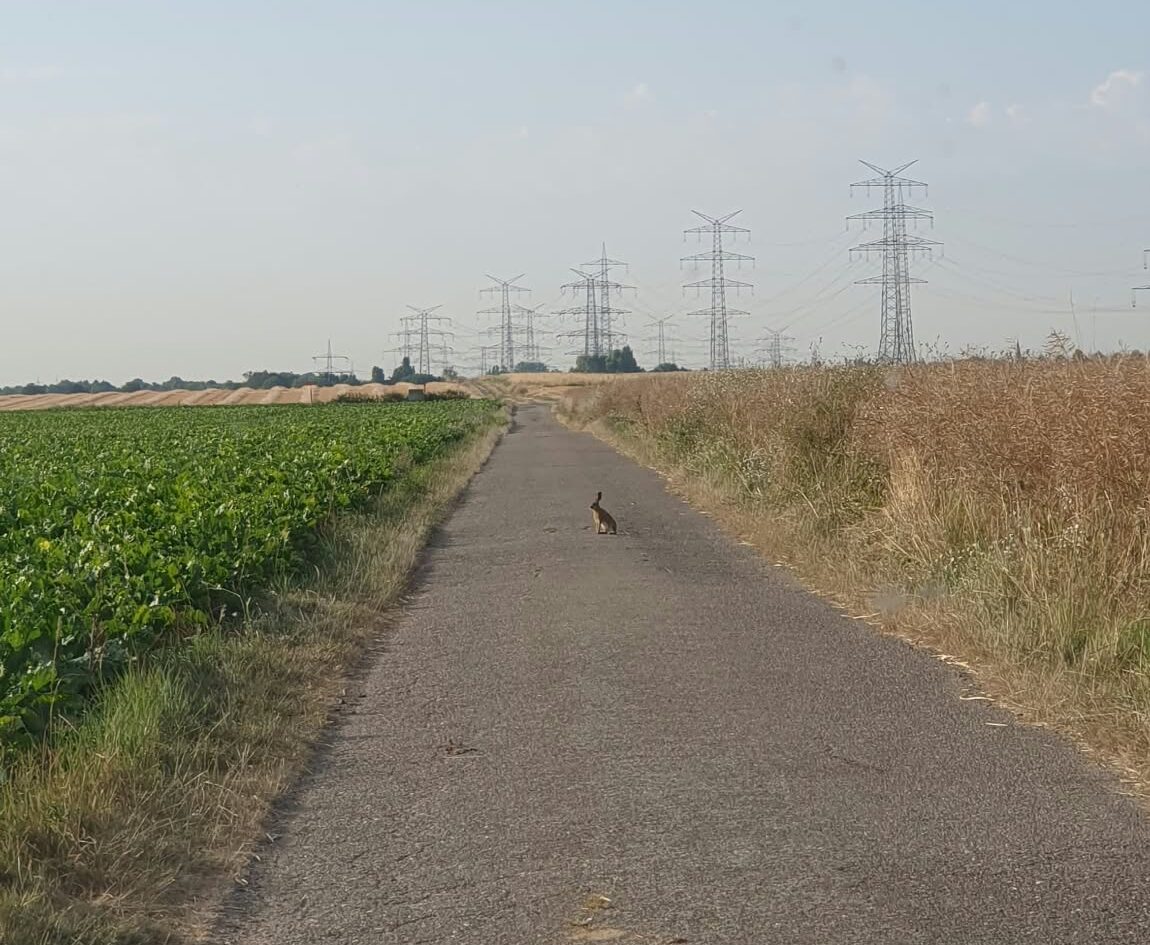
🐇 A brown hare spotted during the farmland bird survey
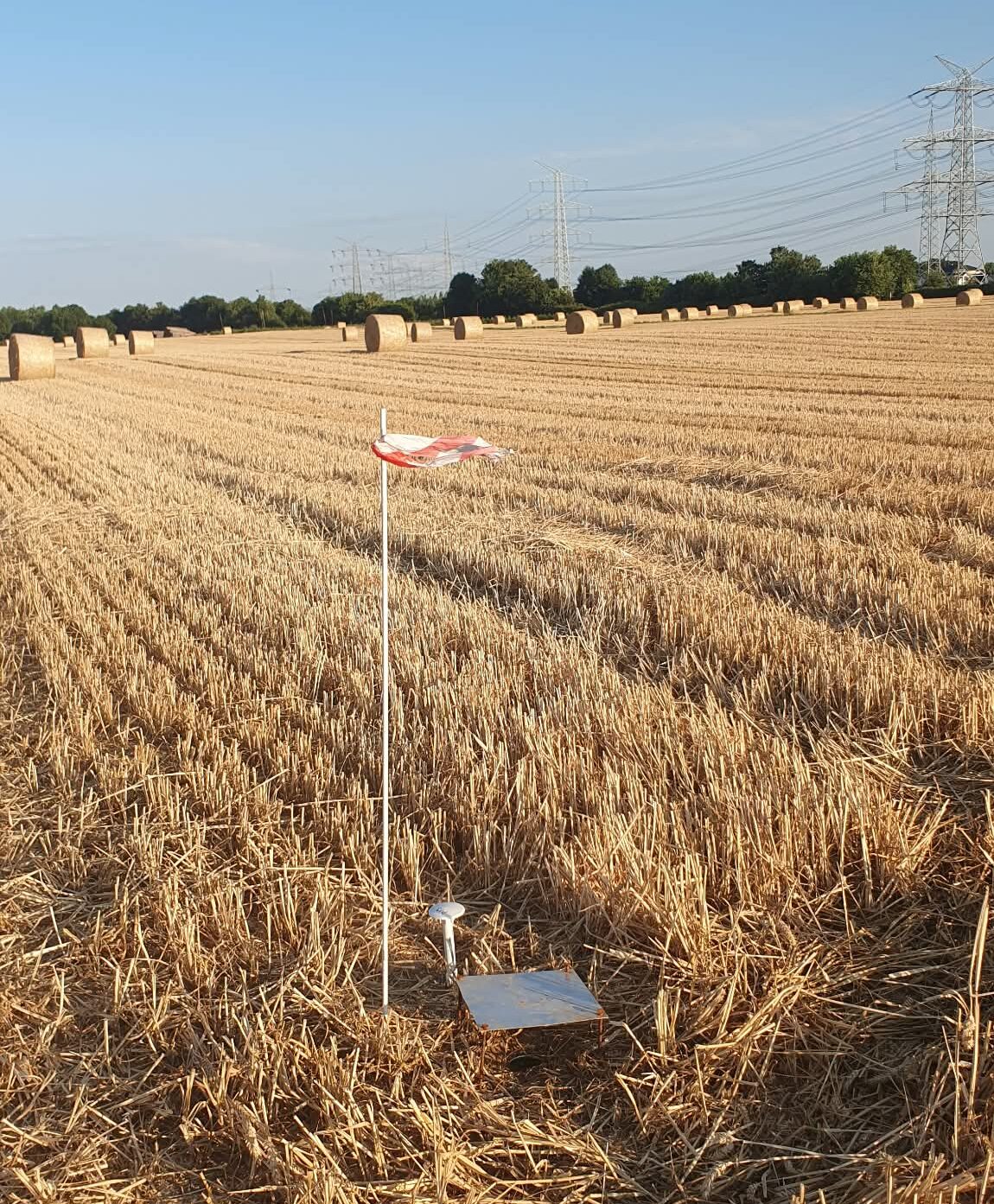
🌇 One of our environmental loggers after harvest
From field observations to meaningful results
With the fieldwork completed, the next step is to analyse the collected data. What is the current state of biodiversity in these agricultural landscapes? What can the monitoring tell us about the effects of the measures implemented so far? And where might further improvements be needed?
These observations will help us better understand the conditions for farmland wildlife and evaluate the effectiveness of biodiversity-friendly agricultural practices.
In the coming years, the surveys will be repeated to assess how species diversity and soil quality develop over time. By comparing results across different monitoring periods, we hope to gain valuable insights into the long-term effects of the project’s conservation measures.
The field season may be over, but the research continues. Stay tuned for the results! 🌾🐹🦋
Project partners:
PXL Bio Research, Vlaamse Landmaatschappij (VLM), Boerennatuur VL, Elzéard Foundation, Boerenbond, Natuur en Bos, Agentschap Landbouw en Zeevisserij, Vlaamse Gewest, Natuurrijk Limburg, Het Limburgs Landschap, Zodion Zoogdieronderzoek Nederland, GaiaZOO, Provincie Limburg, Ministerie van Landbouw, Visserij, Voedselzekerheid en Natuur, Biologische Station Bonn / Rhein-Erft e.V. – Naturschutzstation Pullheim (NSP), Biologische Station im Rhein-Kreis Neuss e.V. – Naturschutzstation Rommerskirchen (NSR), LANUK NRW, Ministerium für Umwelt, Naturschutz und Verkehr des Landes NRW, Ministerium für Landwirtschaft und Verbraucherschutz NRW
#FarmlandBiodiversity #LIFECricetus #LIFEprogramme #SustainableAgriculture #FieldTrials #Monitoring
Piecing together a hamster-friendly cropping plan
 How do you design a cropping plan that benefits both the European hamster and farmers?
As part of LIFE Cricetus, our project partner Stichting Limburgs Landschap has made 15 hectares of its arable nature reserve in Sibbe, the Netherlands, available to test hamster-friendly crop combinations. In mid-September, Stichting Limburgs Landschap, Natuurrijk Limburg, an agricultural advisor and PXL BIO-research came together to develop a suitable cropping plan.
Throughout the project, this area will serve as an experimental farm, where different cropping strategies will be tested to identify practical solutions that benefit both the European hamster and wider farmland biodiversity, while remaining economically viable and feasible within farming practices.
The challenge? Combining crops that provide sufficient food resources and vegetation cover throughout the hamster’s active season, while also considering crop rotation and agricultural feasibility.
 In 2027, different combinations of winter cereals, winter oilseed rape, field beans, and red clover will be tested across several fields. Additional trials will include crops such as white lupin and camelina, while sunflowers will be overseeded into an existing stand of Japanese oats and vetch after winter. Two fields with lucerne (alfalfa) will also be maintained.
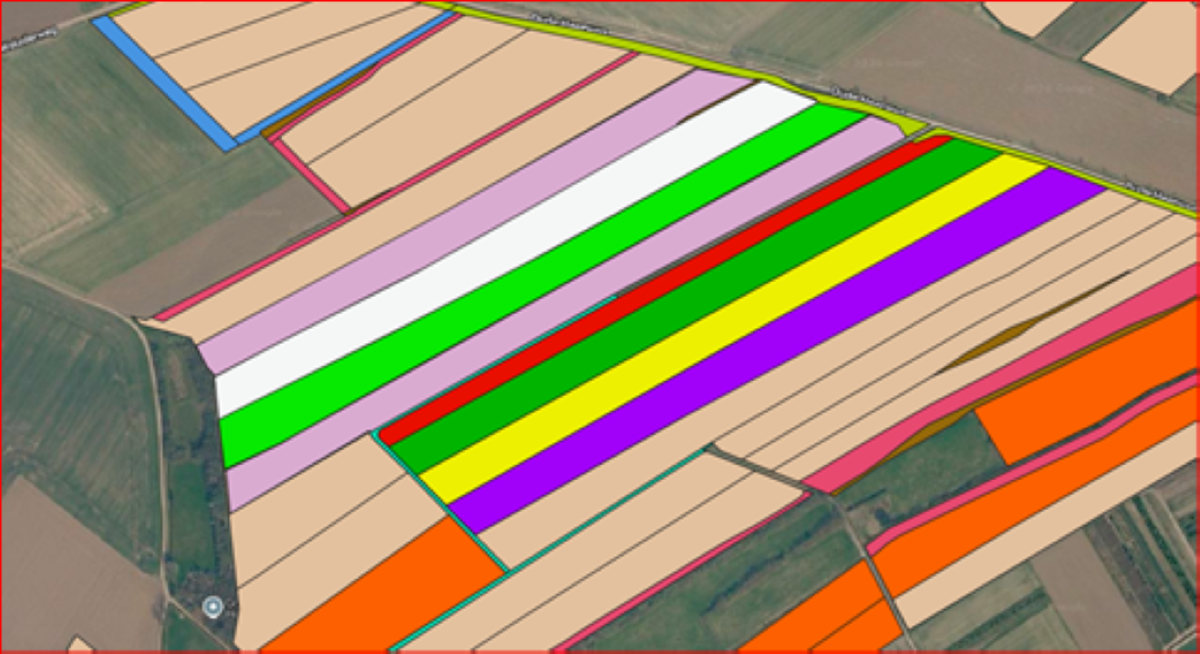
With different fields, crop combinations, and rotation requirements to consider, putting together the right cropping plan is quite a puzzle! The map illustrates this complexity, with each colour representing a different crop combination.
Different crops, one shared goal: creating opportunities for farmers and wildlife that depend on our agricultural landscapes.


Project partners:
PXL Bio Research, Vlaamse Landmaatschappij (VLM), Boerennatuur VL, Elzéard Foundation, Boerenbond, Natuur en Bos, Agentschap Landbouw en Zeevisserij, Vlaamse Gewest, Natuurrijk Limburg, Het Limburgs Landschap, Zodion Zoogdieronderzoek Nederland, GaiaZOO, Provincie Limburg, Ministerie van Landbouw, Visserij, Voedselzekerheid en Natuur, Biologische Station Bonn / Rhein-Erft e.V. – Naturschutzstation Pullheim (NSP), Biologische Station im Rhein-Kreis Neuss e.V. – Naturschutzstation Rommerskirchen (NSR), LANUK NRW, Ministerium für Umwelt, Naturschutz und Verkehr des Landes NRW, Ministerium für Landwirtschaft und Verbraucherschutz NRW
#FarmlandBiodiversity #LIFECricetus #LIFEprogramme #SustainableAgriculture #CropDiversification #FieldTrials
Building hamster habitat through regenerative agriculture.
Recently, project partners Flemish Land Agency (VLM) and the Elzéard Foundation met at the foundation’s inspiring estate in Voeren, Flanders.
During the visit, farm and policy advisors of VLM received a guided tour of the fields and learned more about the foundation’s landscape-scale vision for regenerative agriculture. Hedgerows and wooded field margins, established with locally sourced plant species, help reconnect existing ancient woodlands and strengthen ecological networks across the landscape.
Crops such as cereals, sunflowers and hemp are cultivated using no-till techniques, with a strong focus on improving soil health while maintaining productive yields.
As part of our European project, we will test innovative measures to enhance (soil) agrobiodiversity on the estate. Our goal is to improve habitat quality for the European hamster while ensuring that farming remains both productive and economically viable.
Because thriving biodiversity and profitable farming should go hand in hand.
#RegenerativeAgriculture #Agrobiodiversity #SoilHealth #lifecricetus #LIFEprogramme #SustainableFarming
PXL Bio Research Vlaamse Landmaatschappij (VLM) Boerennatuur VL Elzéard Foundation Boerenbond Natuur en Bos Agentschap Landbouw en Zeevisserij Natuurrijk Limburg Het Limburgs Landschap Zodion Zoogdieronderzoek Nederland GaiaZOO & Gaia Event Center Provincie Limburg Ministerie van Landbouw, Visserij, Voedselzekerheid en Natuur Naturschutzstation Aachen (NSA) Biologische Station Bonn / Rhein-Erft – Naturschutzstation Pullheim (NSP) Biologische Station im Rhein-Kreis Neuss – Naturschutzstation Rommerskirchen (NSR) LANUK NRW Ministerium für Umwelt, Naturschutz und Verkehr des Landes NRW Ministerium für Landwirtschaft und Verbraucherschutz NRW
Partner Introduction 🇳🇱
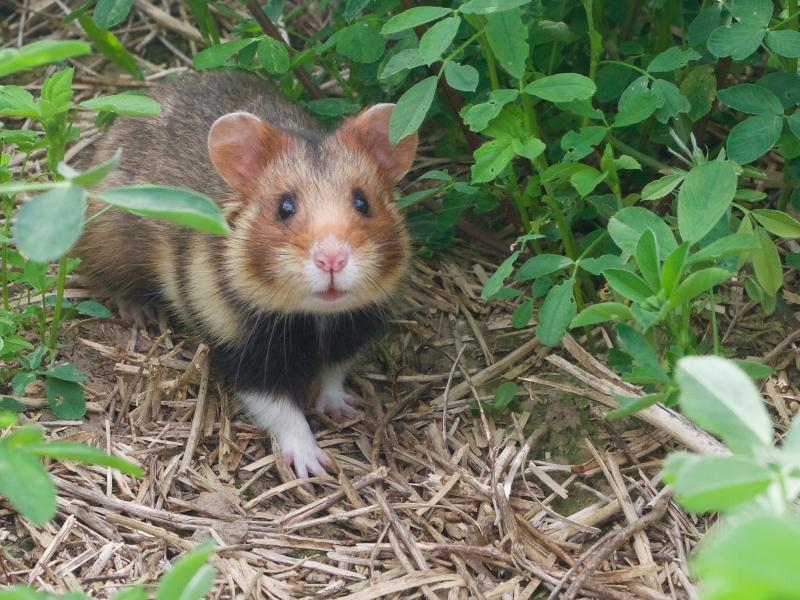
LIFE Cricetus brings together organisations from Belgium, the Netherlands and Germany to restore the European hamster across borders.
Today, we introduce one of our Dutch partners: the Dutch Mammal Society (DMS).
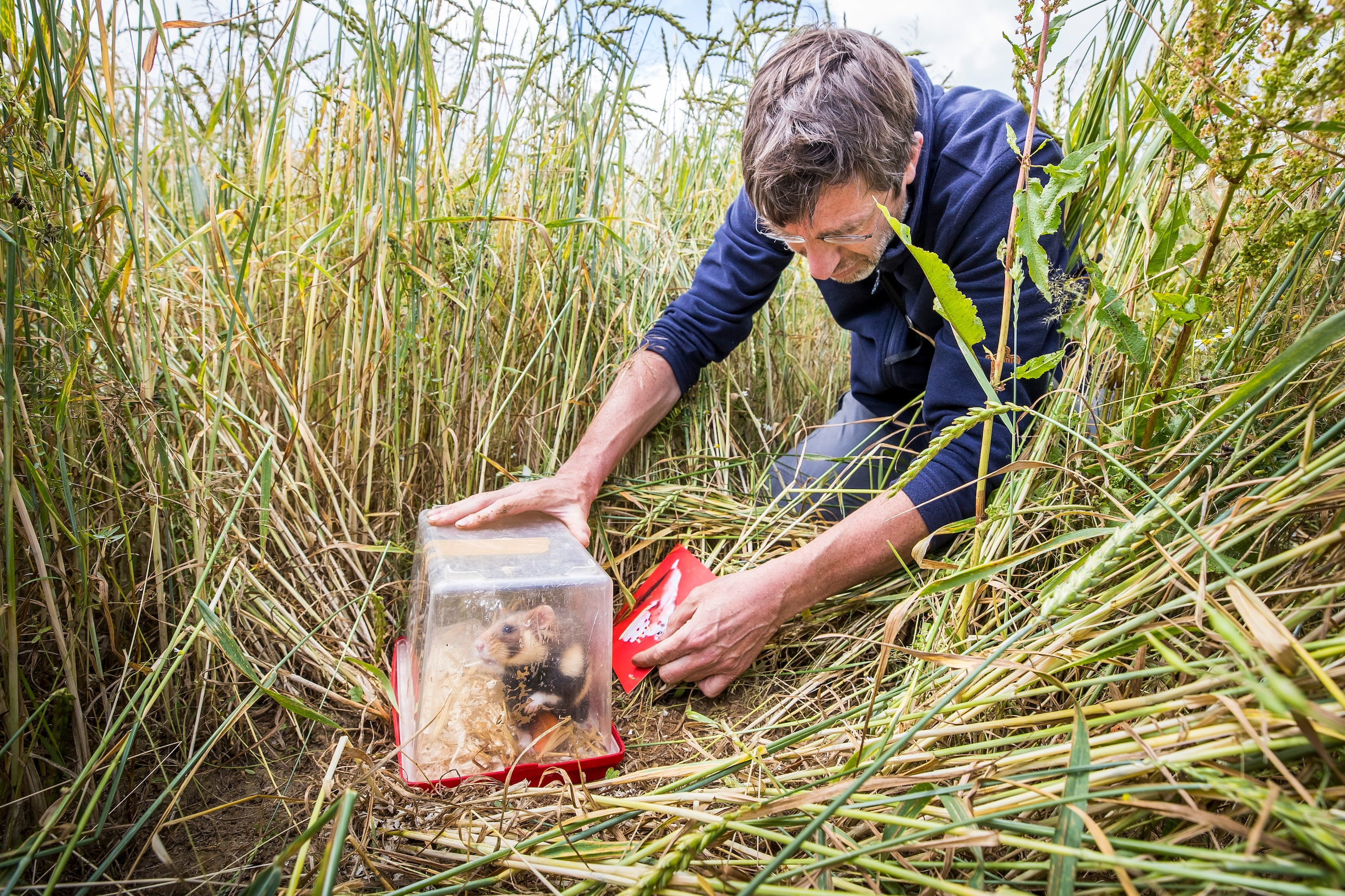
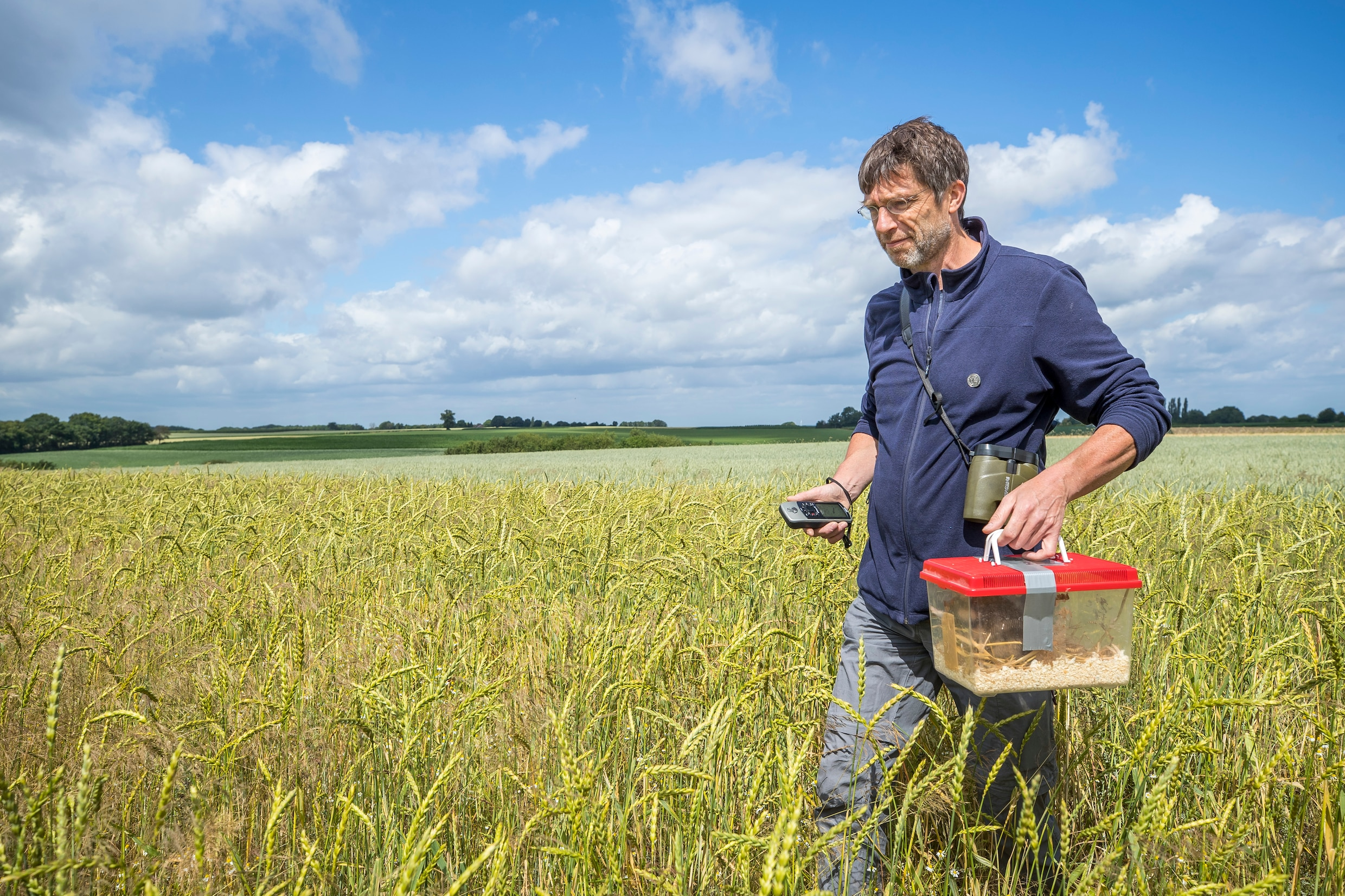
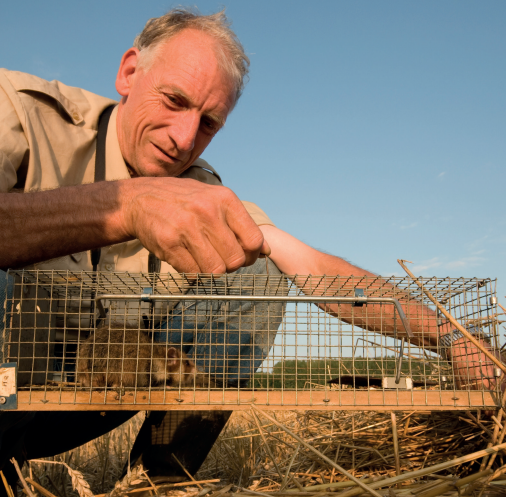
Founded in 1952, the Dutch Mammal Society is dedicated to collecting and sharing knowledge on wild mammals in the Netherlands. With a team of around 35 staff members and the support of thousands of volunteers, the organisation contributes to scientific research, policy development, Red Lists, and practical conservation. Through long-term monitoring and research, they work to better understand why mammal populations thrive or struggle to survive.
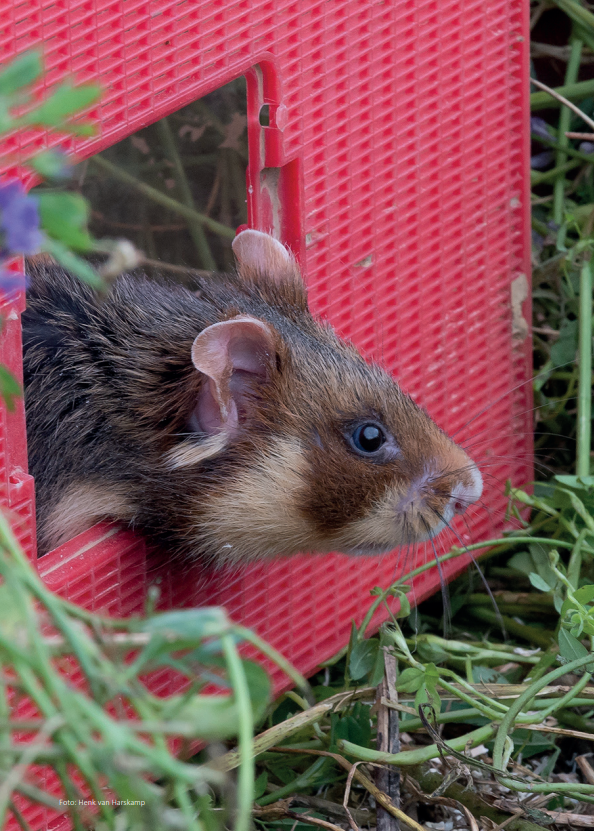
The European hamster has been studied by DMS researchers since at least 1999. Over more than 25 years, this work has generated valuable insights into survival, reproduction, genetics, and habitat management. At the same time, it has highlighted an important challenge: even for highly motivated farmers, integrating hamster-friendly measures into daily agricultural practice is not always straightforward.
The LIFE Cricetus project aims to build on this experience by developing and supporting more effective and practical hamster-friendly management, making it easier to implement across farms in the region.
🔗 Learn more: www.zoogdiervereniging.nl
Field pratices in action
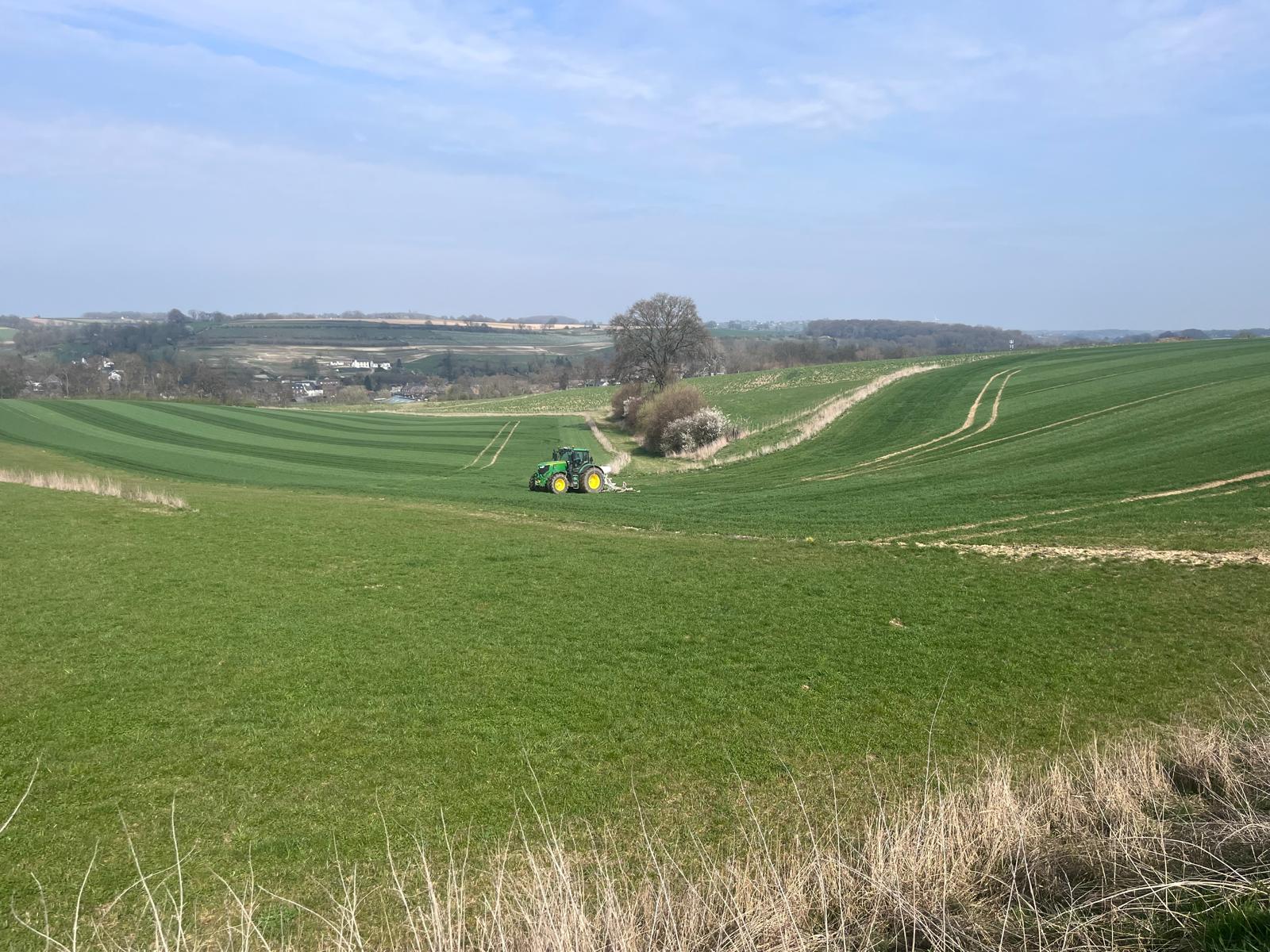
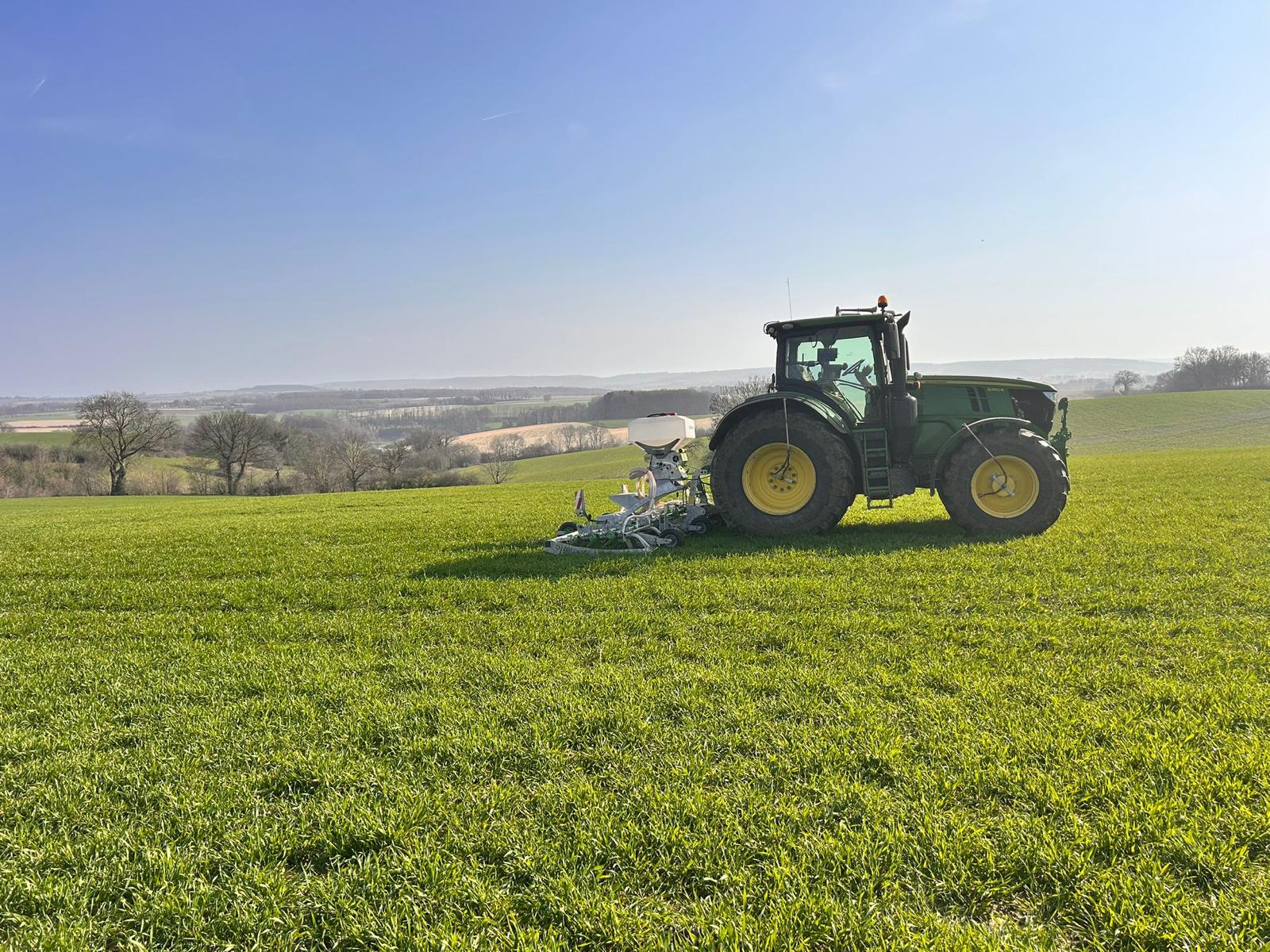
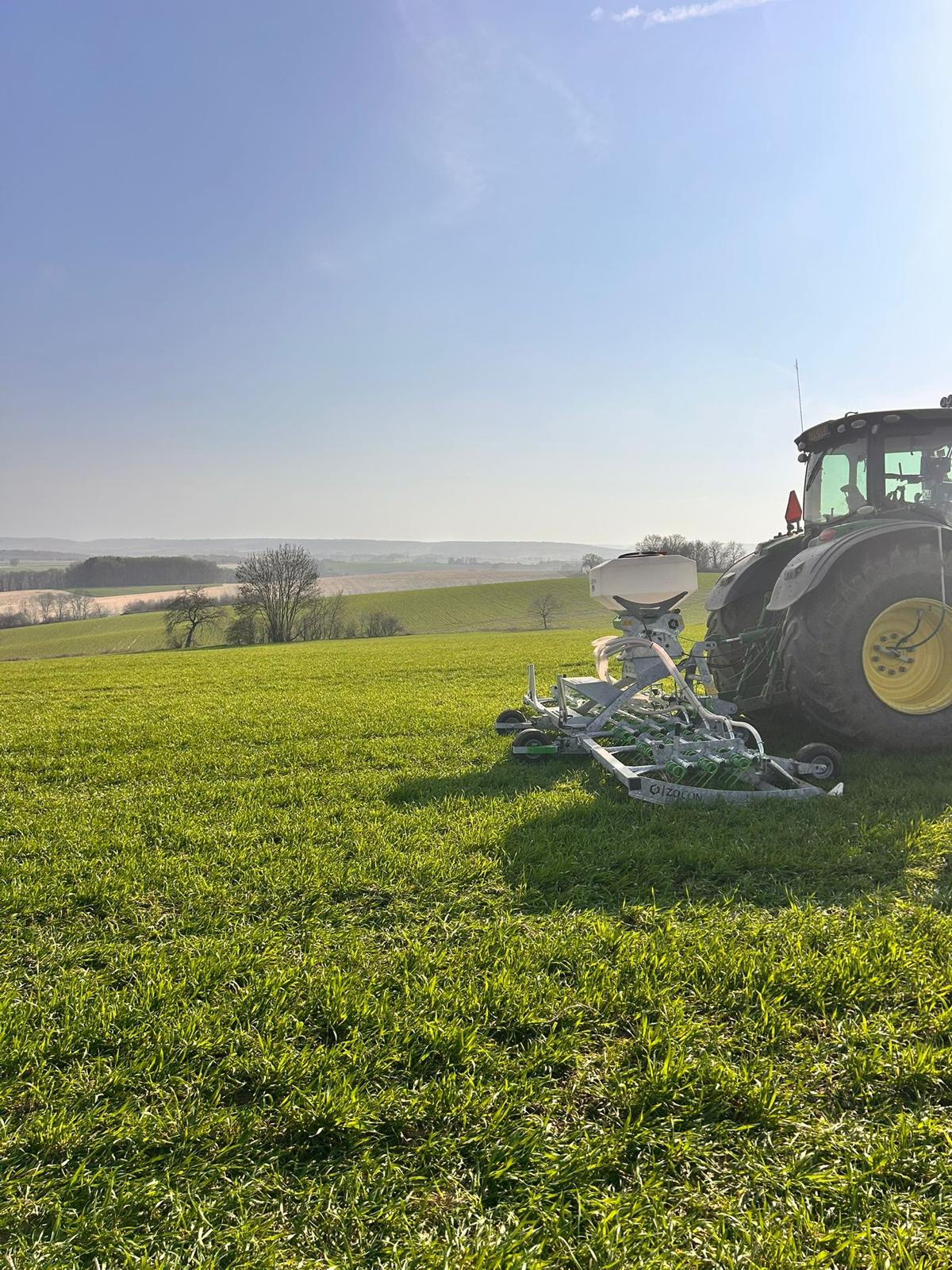
It will still take some time before the wheat in these fields is harvested. However, by carrying out undersowing at the right moment, an important condition for the European hamster can already be secured: providing sufficient cover once the cereals are removed from the field.
After the grain harvest, the undersown crop, in this case clover, quickly develops and provides immediate shelter. This continuity in cover is essential for the hamster, which depends on protection in an otherwise open agricultural landscape.
With this in mind, the ongoing experiment with undersowing in cereals is a promising development within the LIFE Cricetus project.
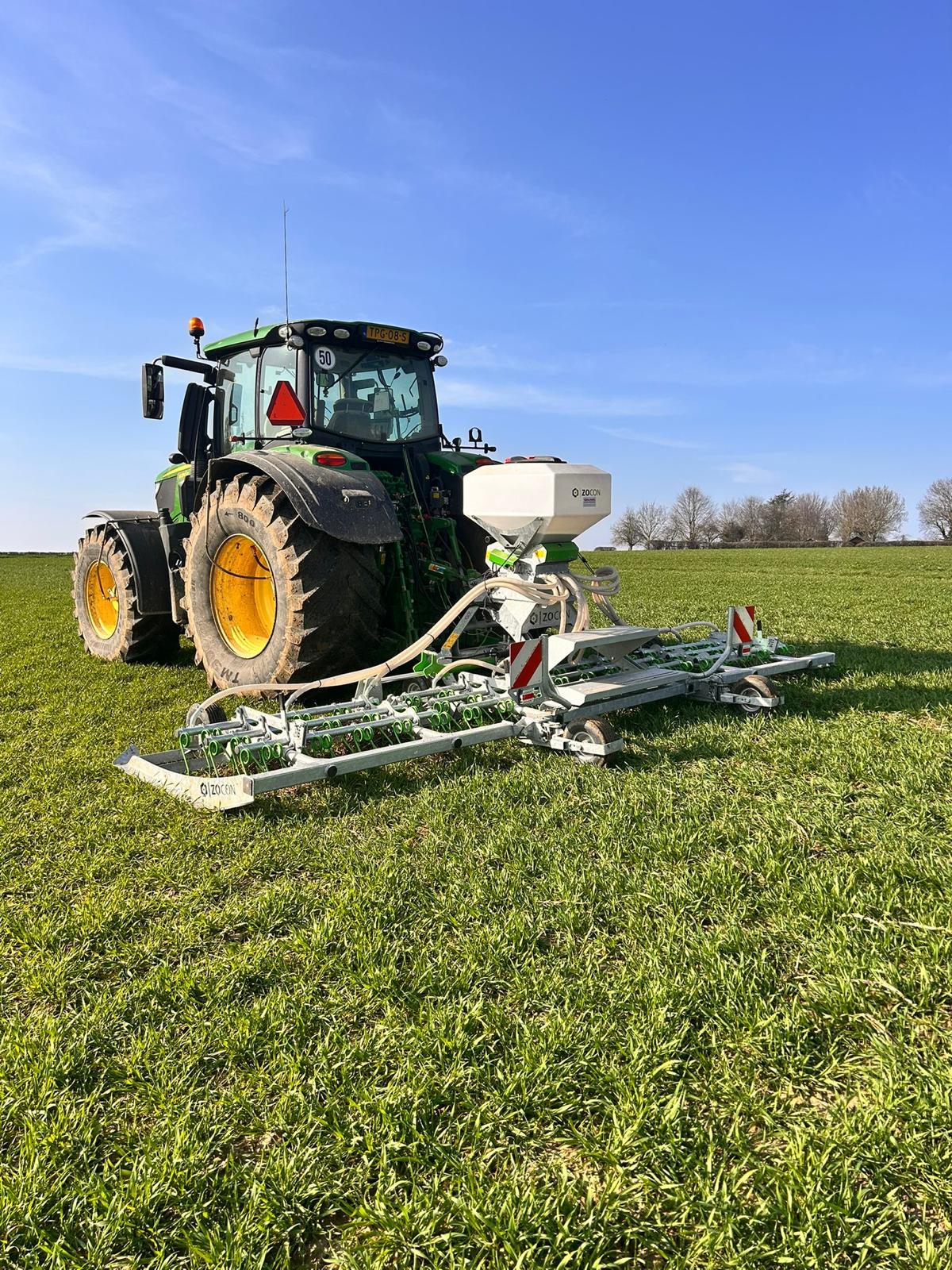
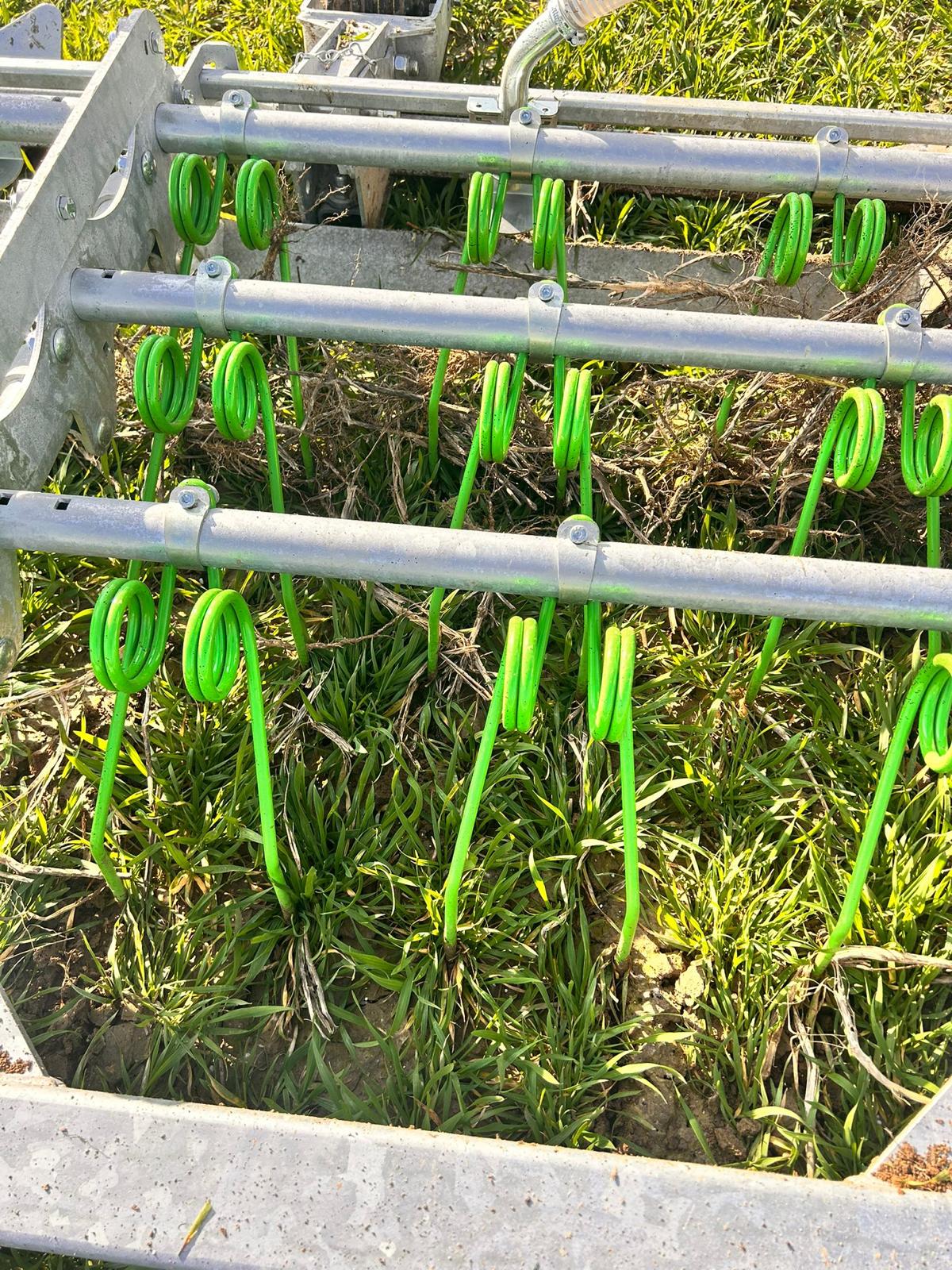
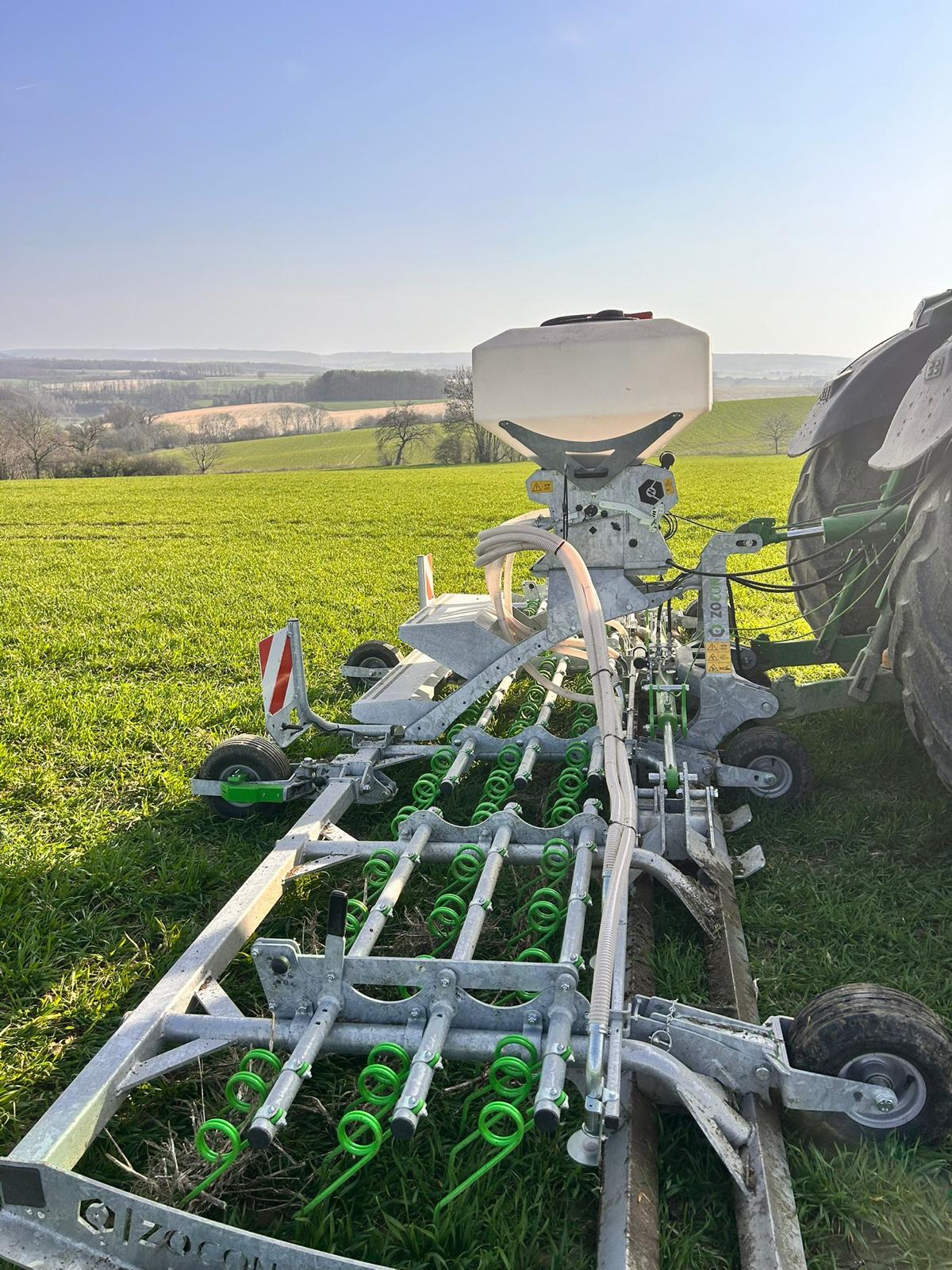
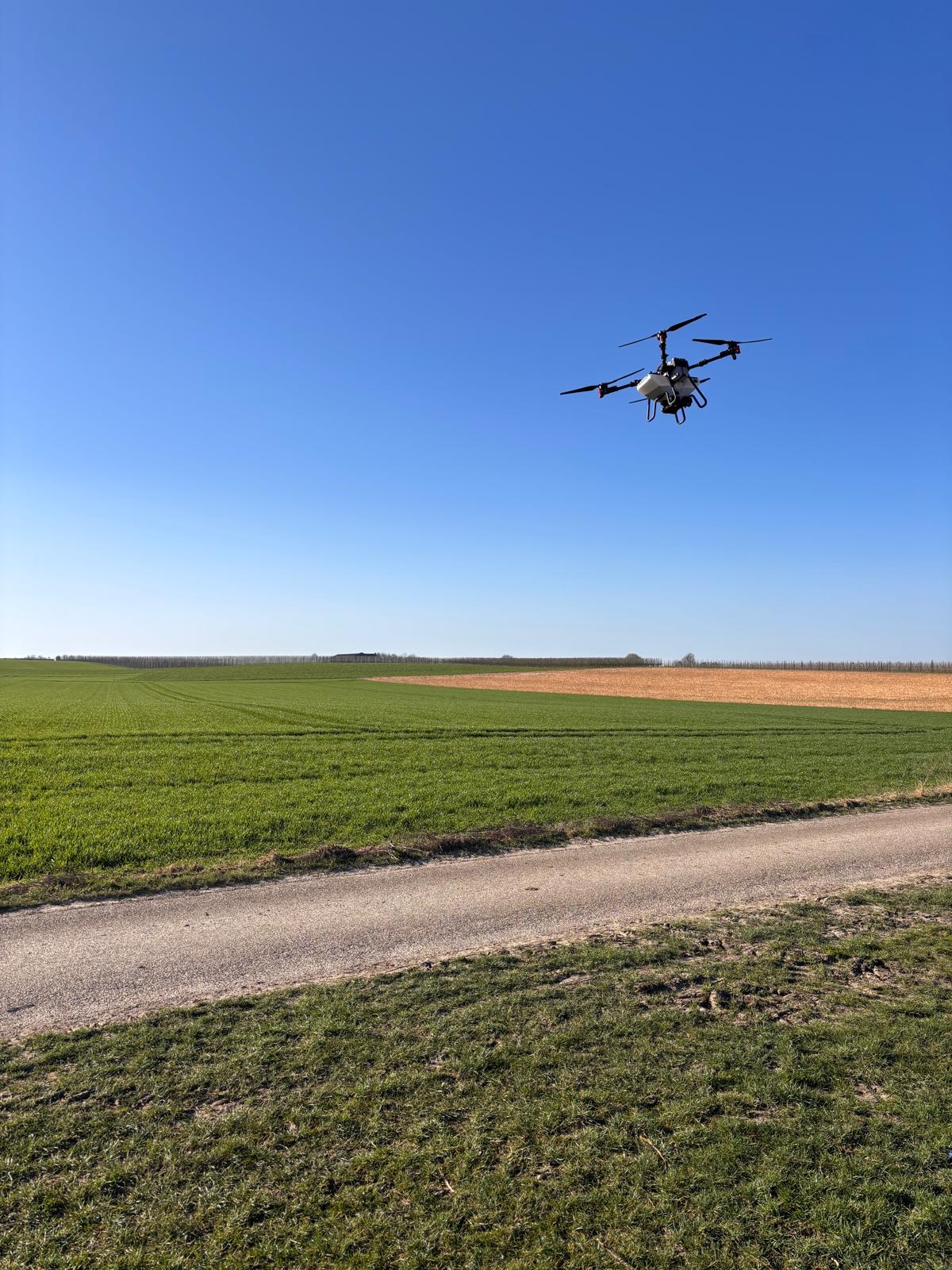
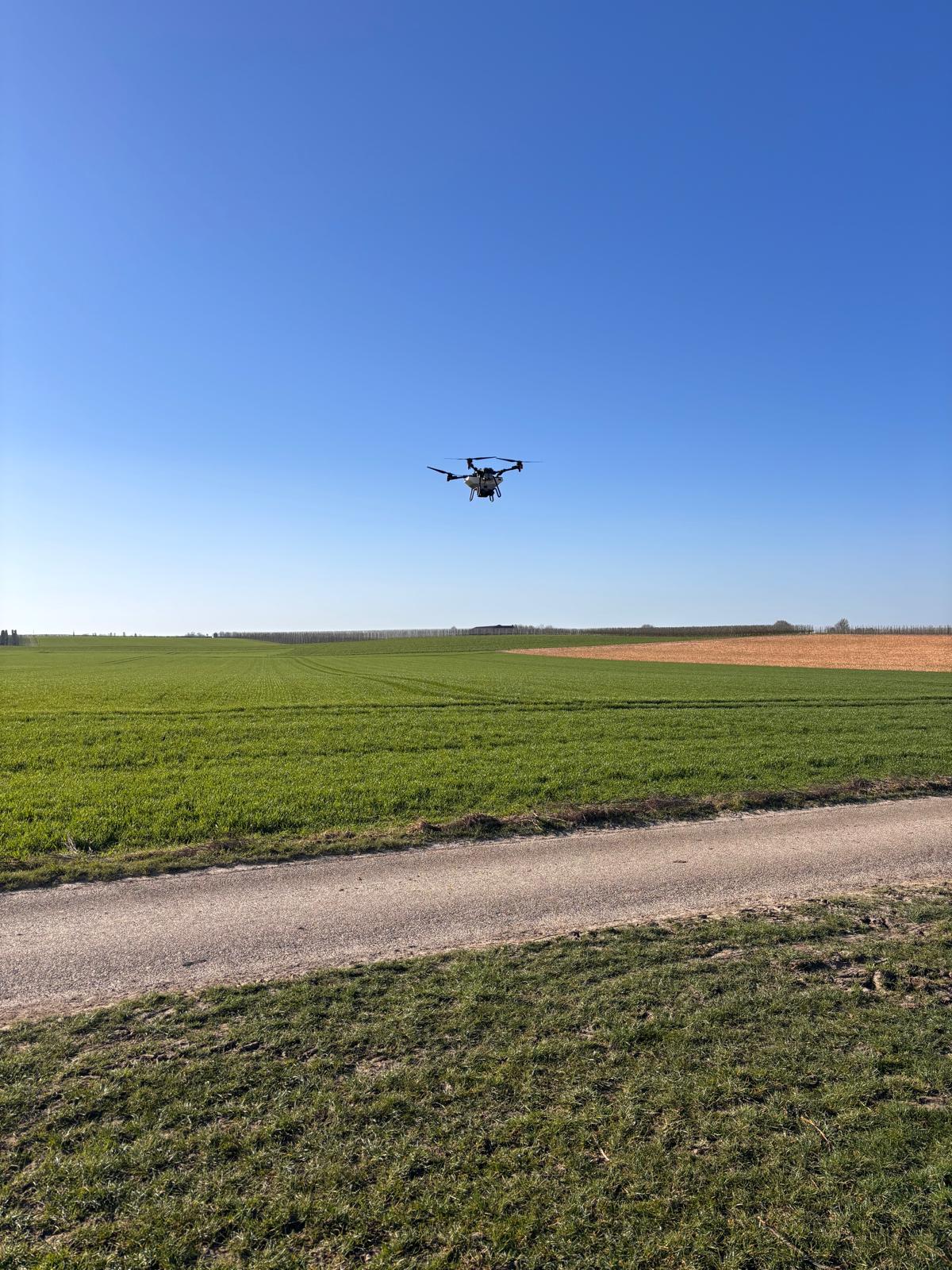
In the photos, different seeding techniques are being used. A seed drill places the seeds between rows using tines to incorporate them into the soil, while a drone broadcasts seeds from above. Clover can germinate easily without incorporation, although sufficient soil moisture over a period of time remains essential for successful establishment. Altogether, this shows that multiple seeding techniques are possible, depending on field conditions and timing.
Together, these approaches highlight how practical field-level decisions can contribute to both productive agriculture and improved habitat conditions.
News
End of the first field season
Over the past few months, our LIFE Cricetus partners have been busy collecting biodiversity data across agricultural landscapes in the Rhein-Erft-Kreis region of Germany. With the field season now coming to an end, it’s time to take a first look at the work carried out and the data collected.
🔍 Monitoring biodiversity in agricultural landscapes
Throughout the field season, different surveys were conducted to assess biodiversity and environmental conditions in the project area. These included European hamster burrow monitoring, pollinator surveys along transects, farmland bird surveys and the use of environmental loggers.
Along the way, our field teams also encountered plenty of interesting wildlife and landscapes. The photos offer a small glimpse into their work:
👥 Our field team during European hamster burrow monitoring
🌱 A transect used during the pollinator survey
🐇 A brown hare spotted during the farmland bird survey
🌇 One of our environmental loggers after harvest
From field observations to meaningful results
With the fieldwork completed, the next step is to analyse the collected data. What is the current state of biodiversity in these agricultural landscapes? What can the monitoring tell us about the effects of the measures implemented so far? And where might further improvements be needed?
These observations will help us better understand the conditions for farmland wildlife and evaluate the effectiveness of biodiversity-friendly agricultural practices.
In the coming years, the surveys will be repeated to assess how species diversity and soil quality develop over time. By comparing results across different monitoring periods, we hope to gain valuable insights into the long-term effects of the project’s conservation measures.
The field season may be over, but the research continues. Stay tuned for the results! 🌾🐹🦋
Project partners:
PXL Bio Research, Vlaamse Landmaatschappij (VLM), Boerennatuur VL, Elzéard Foundation, Boerenbond, Natuur en Bos, Agentschap Landbouw en Zeevisserij, Vlaamse Gewest, Natuurrijk Limburg, Het Limburgs Landschap, Zodion Zoogdieronderzoek Nederland, GaiaZOO, Provincie Limburg, Ministerie van Landbouw, Visserij, Voedselzekerheid en Natuur, Biologische Station Bonn / Rhein-Erft e.V. – Naturschutzstation Pullheim (NSP), Biologische Station im Rhein-Kreis Neuss e.V. – Naturschutzstation Rommerskirchen (NSR), LANUK NRW, Ministerium für Umwelt, Naturschutz und Verkehr des Landes NRW, Ministerium für Landwirtschaft und Verbraucherschutz NRW
#FarmlandBiodiversity #LIFECricetus #LIFEprogramme #SustainableAgriculture #FieldTrials #Monitoring
Piecing together a hamster-friendly cropping plan
How do you design a cropping plan that benefits both the European hamster and farmers? As part of LIFE Cricetus, our project partner Stichting Limburgs Landschap has made 15 hectares of its arable nature reserve in Sibbe, the Netherlands, available to test hamster-friendly crop combinations. In mid-September, Stichting Limburgs Landschap, Natuurrijk Limburg, an agricultural advisor and PXL BIO-research came together to develop a suitable cropping plan.
Throughout the project, this area will serve as an experimental farm, where different cropping strategies will be tested to identify practical solutions that benefit both the European hamster and wider farmland biodiversity, while remaining economically viable and feasible within farming practices.
The challenge? Combining crops that provide sufficient food resources and vegetation cover throughout the hamster’s active season, while also considering crop rotation and agricultural feasibility.
In 2027, different combinations of winter cereals, winter oilseed rape, field beans, and red clover will be tested across several fields. Additional trials will include crops such as white lupin and camelina, while sunflowers will be overseeded into an existing stand of Japanese oats and vetch after winter. Two fields with lucerne (alfalfa) will also be maintained.With different fields, crop combinations, and rotation requirements to consider, putting together the right cropping plan is quite a puzzle! The map illustrates this complexity, with each colour representing a different crop combination.
Different crops, one shared goal: creating opportunities for farmers and wildlife that depend on our agricultural landscapes.
Project partners:
PXL Bio Research, Vlaamse Landmaatschappij (VLM), Boerennatuur VL, Elzéard Foundation, Boerenbond, Natuur en Bos, Agentschap Landbouw en Zeevisserij, Vlaamse Gewest, Natuurrijk Limburg, Het Limburgs Landschap, Zodion Zoogdieronderzoek Nederland, GaiaZOO, Provincie Limburg, Ministerie van Landbouw, Visserij, Voedselzekerheid en Natuur, Biologische Station Bonn / Rhein-Erft e.V. – Naturschutzstation Pullheim (NSP), Biologische Station im Rhein-Kreis Neuss e.V. – Naturschutzstation Rommerskirchen (NSR), LANUK NRW, Ministerium für Umwelt, Naturschutz und Verkehr des Landes NRW, Ministerium für Landwirtschaft und Verbraucherschutz NRW
#FarmlandBiodiversity #LIFECricetus #LIFEprogramme #SustainableAgriculture #CropDiversification #FieldTrials
Building hamster habitat through regenerative agriculture.
Recently, project partners Flemish Land Agency (VLM) and the Elzéard Foundation met at the foundation’s inspiring estate in Voeren, Flanders.
During the visit, farm and policy advisors of VLM received a guided tour of the fields and learned more about the foundation’s landscape-scale vision for regenerative agriculture. Hedgerows and wooded field margins, established with locally sourced plant species, help reconnect existing ancient woodlands and strengthen ecological networks across the landscape.
Crops such as cereals, sunflowers and hemp are cultivated using no-till techniques, with a strong focus on improving soil health while maintaining productive yields.
As part of our European project, we will test innovative measures to enhance (soil) agrobiodiversity on the estate. Our goal is to improve habitat quality for the European hamster while ensuring that farming remains both productive and economically viable.
Because thriving biodiversity and profitable farming should go hand in hand.
#RegenerativeAgriculture #Agrobiodiversity #SoilHealth #lifecricetus #LIFEprogramme #SustainableFarming
PXL Bio Research Vlaamse Landmaatschappij (VLM) Boerennatuur VL Elzéard Foundation Boerenbond Natuur en Bos Agentschap Landbouw en Zeevisserij Natuurrijk Limburg Het Limburgs Landschap Zodion Zoogdieronderzoek Nederland GaiaZOO & Gaia Event Center Provincie Limburg Ministerie van Landbouw, Visserij, Voedselzekerheid en Natuur Naturschutzstation Aachen (NSA) Biologische Station Bonn / Rhein-Erft – Naturschutzstation Pullheim (NSP) Biologische Station im Rhein-Kreis Neuss – Naturschutzstation Rommerskirchen (NSR) LANUK NRW Ministerium für Umwelt, Naturschutz und Verkehr des Landes NRW Ministerium für Landwirtschaft und Verbraucherschutz NRW
Partner Introduction 🇳🇱
LIFE Cricetus brings together organisations from Belgium, the Netherlands and Germany to restore the European hamster across borders.
Today, we introduce one of our Dutch partners: the Dutch Mammal Society (DMS).
Founded in 1952, the Dutch Mammal Society is dedicated to collecting and sharing knowledge on wild mammals in the Netherlands. With a team of around 35 staff members and the support of thousands of volunteers, the organisation contributes to scientific research, policy development, Red Lists, and practical conservation. Through long-term monitoring and research, they work to better understand why mammal populations thrive or struggle to survive.
The European hamster has been studied by DMS researchers since at least 1999. Over more than 25 years, this work has generated valuable insights into survival, reproduction, genetics, and habitat management. At the same time, it has highlighted an important challenge: even for highly motivated farmers, integrating hamster-friendly measures into daily agricultural practice is not always straightforward.
The LIFE Cricetus project aims to build on this experience by developing and supporting more effective and practical hamster-friendly management, making it easier to implement across farms in the region.
🔗 Learn more: www.zoogdiervereniging.nl
Field pratices in action
It will still take some time before the wheat in these fields is harvested. However, by carrying out undersowing at the right moment, an important condition for the European hamster can already be secured: providing sufficient cover once the cereals are removed from the field.
After the grain harvest, the undersown crop, in this case clover, quickly develops and provides immediate shelter. This continuity in cover is essential for the hamster, which depends on protection in an otherwise open agricultural landscape.
With this in mind, the ongoing experiment with undersowing in cereals is a promising development within the LIFE Cricetus project.
In the photos, different seeding techniques are being used. A seed drill places the seeds between rows using tines to incorporate them into the soil, while a drone broadcasts seeds from above. Clover can germinate easily without incorporation, although sufficient soil moisture over a period of time remains essential for successful establishment. Altogether, this shows that multiple seeding techniques are possible, depending on field conditions and timing.
Together, these approaches highlight how practical field-level decisions can contribute to both productive agriculture and improved habitat conditions.