
COMMON
HAMSTER
DISTRIBUTION
From Abundant to Critically Endangered.
The Common hamster, also often called European hamster is a species that developped during the pleistocene to inhabit steppe landscapes of Europe and Asia (Niethammer, 1982). Several genetic lineages exist in Europe.
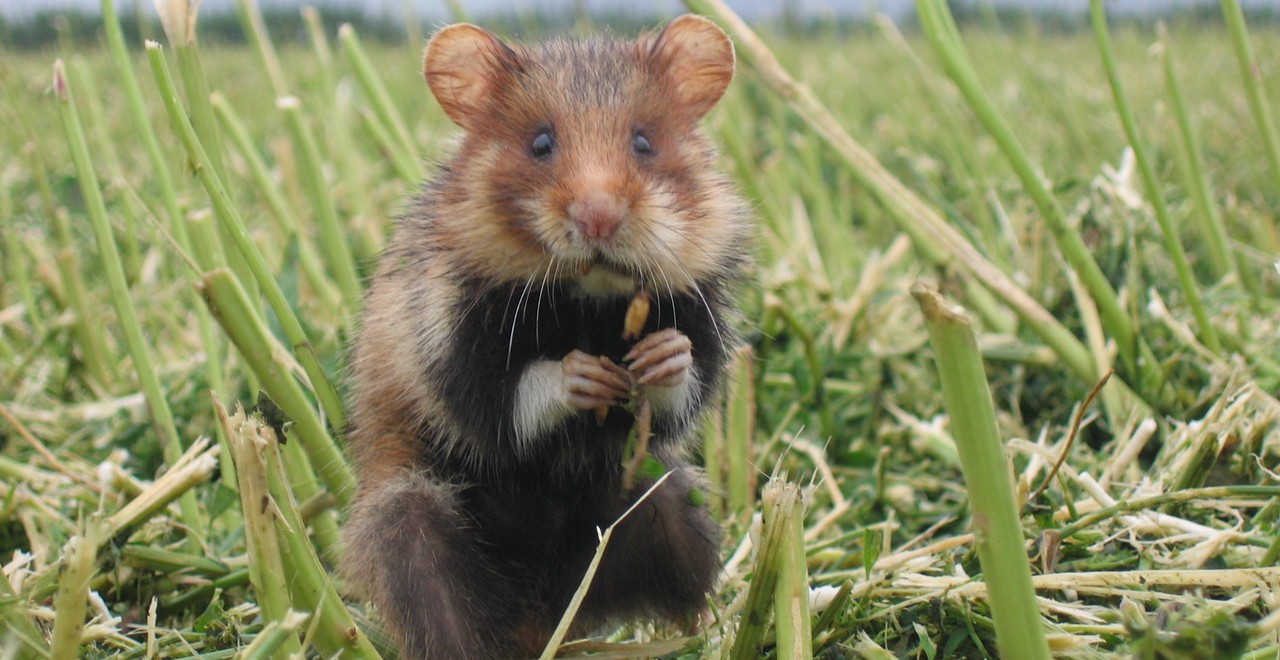
The populations in Belgium, the Netherlands, and North Rhine-Westphalia (Germany) form a separate western lineage called the “BNN-lineage.”
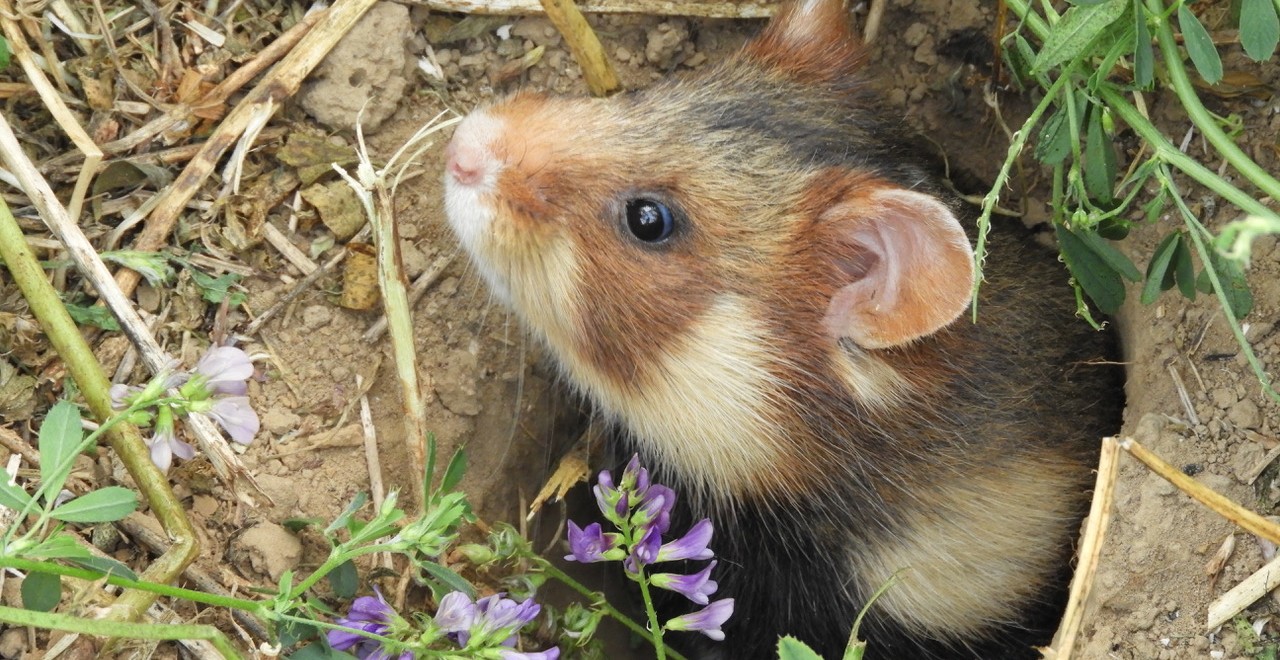
At the start of the 20th century, the European hamster still lived across Western Europe (Van Donink and Baert, 2023). Numbers of ten to eighty individuals per hectare were common, and peaks reached two thousand per hectare (Ruzic 1977, Surov et al., 2016). The hamster was then considered a pest species.
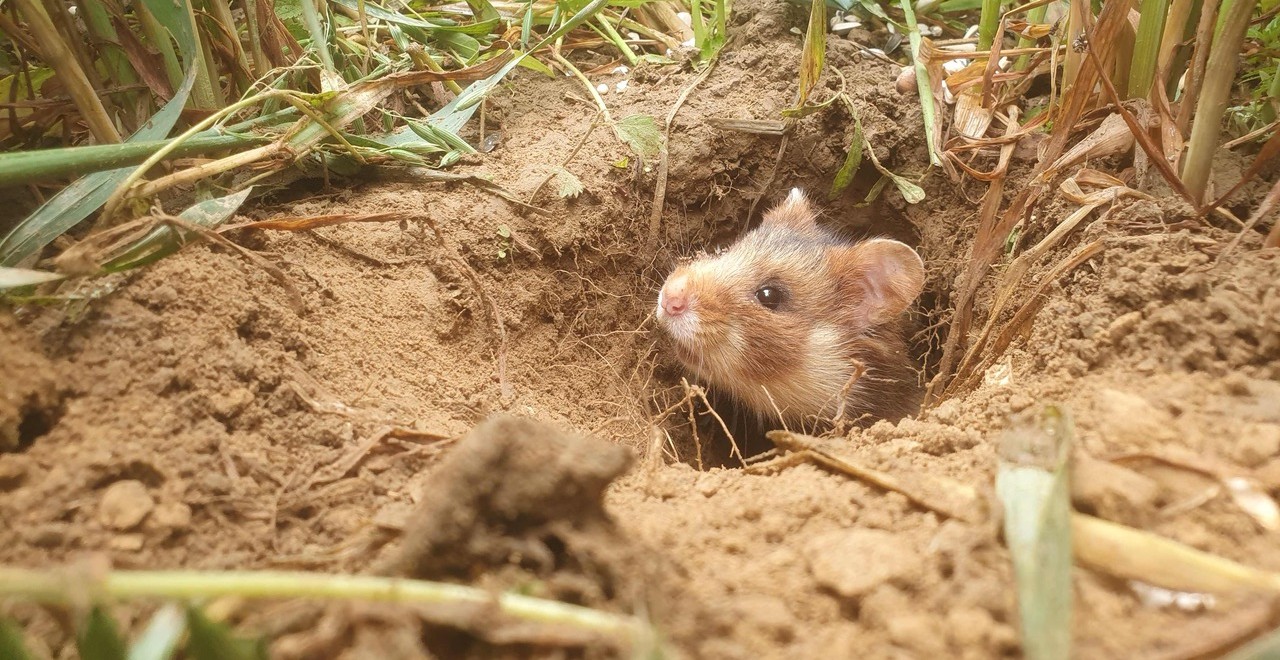
In recent decades its range shrank and long term monitoring shows a sharp drop in population sizes (Ambros et al. 2003, Bihari 2003, Ziomek & Banaszek 2007, Tkadlec et al. 2012, Korbut et al. 2013, Rusin et al. 2013, Hegyeli et al. 2015). Current estimates show a yearly decline that may be 50% (Banaszek et al. 2020). If this trend continues, the species may disappear from Europe around 2038 (Surov et al., 2016). In Belgium, the Netherlands and Nord Rhein Westfalen the decline is even worse and survival of the species solely depended on breeding and reïntroduction efforts.
EUROPEAN PROTECTION STATUS
This unfavourable and declining conservation status of the Common hamster resulted in the Bern Convention (Annex II) and the EU Habitats Directive (Annex IV) requiring Member States to support and restore its populations so they reach a good conservation status. Even despite this strict protection by the early 2000s, the populations in the BNN genetic lineage were on the brink of extinction and some completely disappeared.
In the Netherlands the hamster protection plan ran from 2000 – 2004 en started with the introduction of bred individuals from the BNN genetic lineage. Conservation efforts in Belgium en Germany took a slower start, which led to the European Commission sending reasoned opinions to Germany (2001) and Belgium (2005) for not protecting hamster breeding sites. This resulted in more National Species Protection Plans (SPPs), following the footsteps of the Netherlands. Using measures consisting of the breeding, introduction/ restocking of the species and enhancing the habitat by implementing Agri- Environment-Climate Measures (AECM).
Despite these SPPs the conservation status of the species did not improve. Legal action alone cannot stop the decline. Cross-border projects such as LIFE Cricetus must solve key problems and help Member States meet the Directive in a realistic way.
IUCN Red List Assessment
Why is the Common Hamster Critically Endangered?
Whether you are consulting the IUCN Red List assessment for academic research, policy development, or conservation planning, this document provides a scientifically grounded overview of the Common Hamster’s conservation status. It outlines population trends, quantified extinction risk, identified threats, and recommended conservation measures. As part of the global Red List framework, the assessment serves as an authoritative reference to guide evidence-based decisions aimed at preventing further decline and supporting long-term species recovery in Western Europe.

REFERENCES
COMMON
HAMSTER
LIFE BENEATH THE FIELDS
The Common hamster, Cricetus cricetus, belongs to the rodent order (Rodentia) and the Cricetidae family, which includes voles, rats, and other small mammals. Within this family, it belongs to the Cricetinae subfamily, the true hamsters (Arctos, 2018). The species stands out because of its size. Adults reach 27–30 cm in length, including the short tail, and weigh between 160 and 600 grams (Ecopedia, 2024; Van Donink and Baert, 2023). This makes it the largest hamster species in the world (Weinhold, 2009; La Haye, 2020). Its typical features include rounded ears, a russet-brown coat, and a black belly with white spots (Schröder, 2014).
Outside the breeding season, males and females live solitary in their own underground burrows. dug to a depth of approximately 1 metre (maximum 2 metres) (Glas, 1961). Only loess and loam soils are suitable for digging burrows, as these soils are sufficiently firm and at the same time permeable to water, preventing moisture problems in the burrow (Piechocki, 1970; Niethammer 1982).
Hibernation takes place from November to March. In autumn, the hamster ensures that its burrow is well stocked with at least 1 to 2 kg of plant-based food, consisting mainly of grains (Wendt, 1991; Nechay, 2000). In the second half of May, the breeding season begins and females will temporarily tolerate the presence of males in their burrow. The polygamous male seeks out as much females as possible throughout the season. The population dynamics of the hamster follow the r-strategy, whereby many offspring are produced with a short lifespan. The gestation period is 17-18 days and the average litter size observed in captivity is 5-6 pups, but can be as high as 10-12 pups (Kuiters et al., 2010; La Haye, 2020).
DISTRIBUTION
From Abundant to Critically Endangered.
The Common hamster, also often called European hamster is a species that developped during the pleistocene to inhabit steppe landscapes of Europe and Asia (Niethammer, 1982). Several genetic lineages exist in Europe.
The populations in Belgium, the Netherlands, and North Rhine-Westphalia (Germany) form a separate western lineage called the “BNN-lineage.”
At the start of the 20th century, the European hamster still lived across Western Europe (Van Donink and Baert, 2023). Numbers of ten to eighty individuals per hectare were common, and peaks reached two thousand per hectare (Ruzic 1977, Surov et al., 2016). The hamster was then considered a pest species.
In recent decades its range shrank and long term monitoring shows a sharp drop in population sizes (Ambros et al. 2003, Bihari 2003, Ziomek & Banaszek 2007, Tkadlec et al. 2012, Korbut et al. 2013, Rusin et al. 2013, Hegyeli et al. 2015). Current estimates show a yearly decline that may be 50% (Banaszek et al. 2020). If this trend continues, the species may disappear from Europe around 2038 (Surov et al., 2016). In Belgium, the Netherlands and Nord Rhein Westfalen the decline is even worse and survival of the species solely depended on breeding and reïntroduction efforts.
EUROPEAN PROTECTION STATUS
This unfavourable and declining conservation status of the Common hamster resulted in the Bern Convention (Annex II) and the EU Habitats Directive (Annex IV) requiring Member States to support and restore its populations so they reach a good conservation status. Even despite this strict protection by the early 2000s, the populations in the BNN genetic lineage were on the brink of extinction and some completely disappeared.
In the Netherlands the hamster protection plan ran from 2000 – 2004 en started with the introduction of bred individuals from the BNN genetic lineage. Conservation efforts in Belgium en Germany took a slower start, which led to the European Commission sending reasoned opinions to Germany (2001) and Belgium (2005) for not protecting hamster breeding sites. This resulted in more National Species Protection Plans (SPPs), following the footsteps of the Netherlands. Using measures consisting of the breeding, introduction/ restocking of the species and enhancing the habitat by implementing Agri- Environment-Climate Measures (AECM).
Despite these SPPs the conservation status of the species did not improve. Legal action alone cannot stop the decline. Cross-border projects such as LIFE Cricetus must solve key problems and help Member States meet the Directive in a realistic way.
IUCN Red List Assessment
Why is the Common Hamster Critically Endangered?
Whether you are consulting the IUCN Red List assessment for academic research, policy development, or conservation planning, this document provides a scientifically grounded overview of the Common Hamster’s conservation status. It outlines population trends, quantified extinction risk, identified threats, and recommended conservation measures. As part of the global Red List framework, the assessment serves as an authoritative reference to guide evidence-based decisions aimed at preventing further decline and supporting long-term species recovery in Western Europe.
AGRICULTURAL LANDSCAPE DEPENDENCE
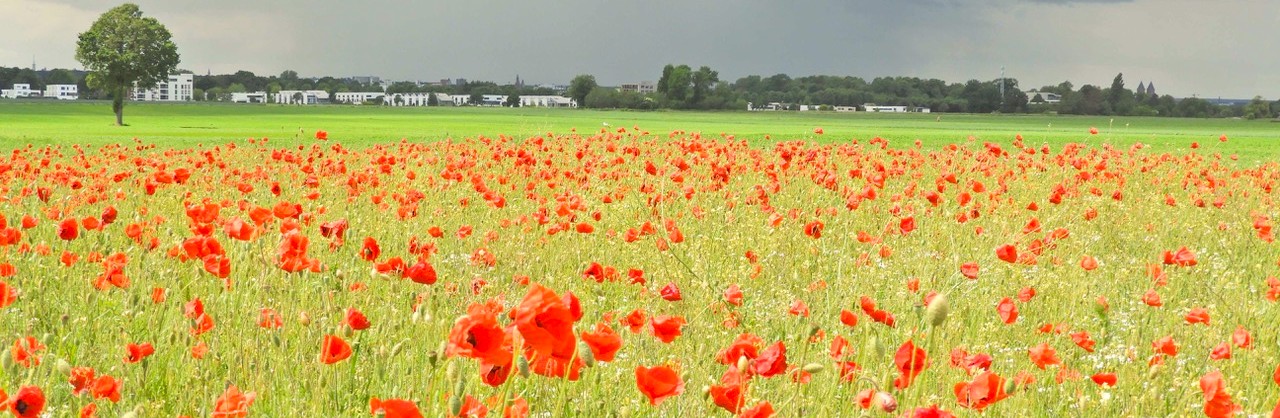
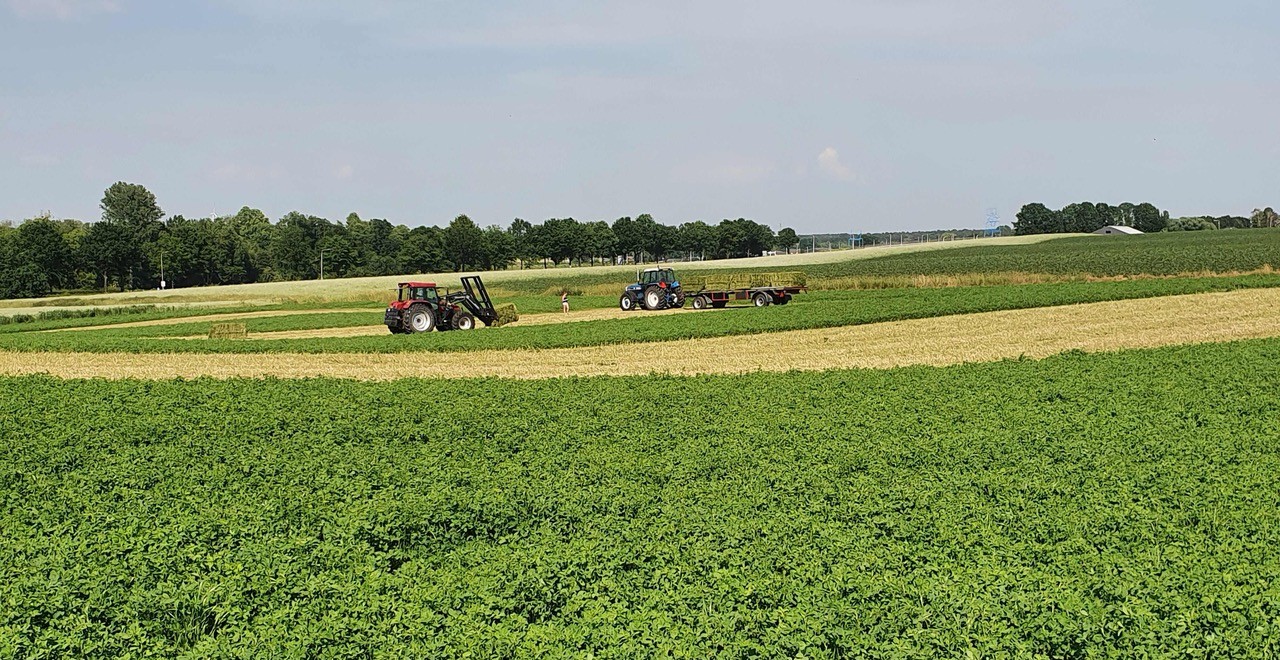
The Common hamster prefers fertile lowland steppe with strong sunlight and deep loam or loess soils. In countries with declining populations, hamsters only survive in the best soils, which also support intensive farming (Nechay 2000, Neumann K. et al. 2005). The hamster addapted to these agricultural practices, mainly grain cultivation, and was even able to colonize previously uninhabitable landscapes (Neumann K. et al. 2005). Large-scale changes in agriculture could threaten the hamster. Intensive arable farming with heavy machines, monocultures, simple crop rotations, and the loss of small uncultivated patches reduce cover and food and expose the species to predators during its breeding season. These changes also negatively impact our soil life, pollinators and farmland birds. The Common hamster acts as a flagship species for all these animals. The Common hamster is a prey species with a life span of about two years. When the habitat offers enough cover and food, hamsters can cope with a strong predation pressure. As an r-strategist, the species can breed several times during the active season and raise large litters, which helps the population withstand high mortality. Problems start when farming shortens the breeding season or when females produce too few young to balance losses from predation. Recent monitoring in the project area shows that most females do not produce a second or third litter and that litters contain very few pups. To keep a population stable or growing, females need at least two litters per year, each with five to six pups.
REFERENCES
-
Agentschap Natuur en Bos (2015)
Soortbeschermingsprogramma voor de Europese hamster in Vlaanderen, 2015-2020. -
Ambros M, Baláž I, Janálová D (2003)
Occurrence of hamster (Cricetus cricetus L., 1758) in western Slovakia. In: Nechay G (ed) Proc 11th Meeting of the International Hamster Workgroup, Budapest. -
Arctos (2018)
Taxonomy details: Cricetus cricetus [WWW Document]. Arctos Database museum. URL https://arctos.database.museum/name/Cricetus%20cricetus (accessed 2.14.25). -
Banaszek, A., Bogomolov, P., Feoktistova, N., La Haye, M., Monecke, S., Reiners, T. E., Rusin, M., Surov, A., Weinhold, U. & Ziomek, J. (2020)
Cricetus cricetus. The IUCN Red List of Threatened Species 2020: e.T5529A111875852. -
Bihari Z (2003)
Regression in distribution of hamster (Cricetus cricetus) in Hungary during the past fifty years. In: Nechay G, Schreiber R, La Haye M (eds) Proc 11th, 14th and 15th Meeting of the International Hamster Workgroup, Budapest, Hungary (2003), Munsterschwarzach, Germany (2006) and Kerkrade, the Netherlands (2007), Part I. Alterra/Radboud University Nijmegen, Wageningen/Nijmegen, p 27–30. -
Ecopedia (2024)
Hamster [WWW Document]. Ecopedia. URL https://www.ecopedia.be/dieren/hamster (accessed 12.28.24). -
Glas, P. (1961)
De Hamster (Cricetus cricetus L.) in Zuid-Limburg. De levende natuur, 64(4), 77-81. -
Hegyeli Z, Kecskés A, Korbut Z, Banaszek A (2015)
The distribution and genetic diversity of the Common hamster (Cricetus cricetus) in central and western Romania. Folia Zool (Brno) 64: 173−182. -
Korbut Z, Rusin MY, Banaszek A (2013)
The distribution of the Common hamster (Cricetus cricetus) in western Ukraine. Zool Pol 58: 99−112. -
Kuiters, A., La Haye, M., Muskens, G. & Van Kats, R. (2010)
Perspectieven voor een duurzame bescherming van de hamster in Nederland. Wageningen, Alterra, Alterra-rapport 2022. 80 blz.; 8 fig.; 13 tab.; 55 ref. -
La Haye, M.J.J. (2020)
The common hamster in the Netherlands. From pest species to icon of a biodiverse agricultural landscape. Radboud University Nijmegen, Nijmegen. -
Nechay, G. (2000)
Status of hamsters: Cricetus cricetus, Cricetus migratorius, Mesocricetus newtoni and other hamster species in Europe. Council of Europe Publishing. -
Neumann, K., Michaux, J., Maak, S., Jansman, H., Kayser, A., Mundt, G. & Gattermann, R. (2005)
Genetic spatial structure of European common hamsters (Cricetus cricetus)—a result of repeated range expansion and demographic bottlenecks. Molecular Ecology, 14(5), 1473-1483. -
Niethammer, J. (1982)
Cricetus cricetus (Linaeus, 1758). Hamster (Feldhamster). In: J. Niethammer & F. Krapp. Handbuch der Säugetiere Europas. Band 2/I Rodentia II: pp.7-28. Wiesbaden. -
Piechocki, R. (1970)
De gewone hamster. Het leven der dieren. Grzimek, deel XI. Zoogdieren, 2. -
Rusin MY, Banaszek A, Mishta AV (2013)
The Common hamster (Cricetus cricetus) in Ukraine: evidence for population decline. Folia Zool (Brno) 62: 207−213. -
Ružic´ A (1977)
Ispitivanje dinamike brojnosti hrcˇka (Cricetus cricetus L.) u Vojvodini [Study of the population dynamics of the Common hamster (Cricetus cricetus L.) in Vojvodina]. Zašt Bilja 38: 289−300. -
Schröder, O., Astrin, J. & Hutterer, R. (2014)
White chest in the west: pelage colour and mitochondrial variation in the common hamster (Cricetus cricetus) across Europe. Acta theriologica, 59(2), 211-221. -
Surov, A., Banaszek, A., Bogomolov, P., Feoktistova, N., Monecke, S. (2016)
Dramatic global decrease in the range and reproduction rate of the European hamster Cricetus cricetus. Endanger Species Res. https://doi.org/10.3354/esr00749. -
Tkadlec E, Heroldova M, Víšková V, Bednà M, Zejda J (2012)
Distribution of the Common hamster in the Czech Republic after 2000: retreating to optimum lowland habitats. Folia Zool (Brno) 61: 246−253. -
Van Donink, S., Baert, K. (2023)
De Europese hamster (Cricetus cricetus) in Nederland - Evaluatie van 25 jaar hamsterbescherming en -beleid. Brussel. https://doi.org/10.21436/inbor.93612311. -
Weinhold, U. (2008)
Draft European Action Plan For the conservation of the Common hamster (Cricetus cricetus, L. 1758). Third edited version. https://www.researchgate.net/publication/275340185_European_Action_Plan_for_the_conservation_of_the_Common_hamster_Cricetus_cricetus_L_1758. -
Wendt, W. (1991)
Der Winterschlaf des Feldhamsters, Cricetus cricetus (L., 1758) – Energetische Grundlagen und Auswirkungen auf die Populationsdynamik. In: Stubbe, M. (Hrsg.): Populationsökologie von Kleinsäugerarten. Wiss. Beitr. Univ. Halle 1990/34(P42): 67–78. -
Ziomek, J. & Banaszek, A. (2007)
The common hamster, Cricetus cricetus in Poland: status and current range. FOLIA ZOOLOGICA-PRAHA-, 56(3), 235.