Field pratices in action
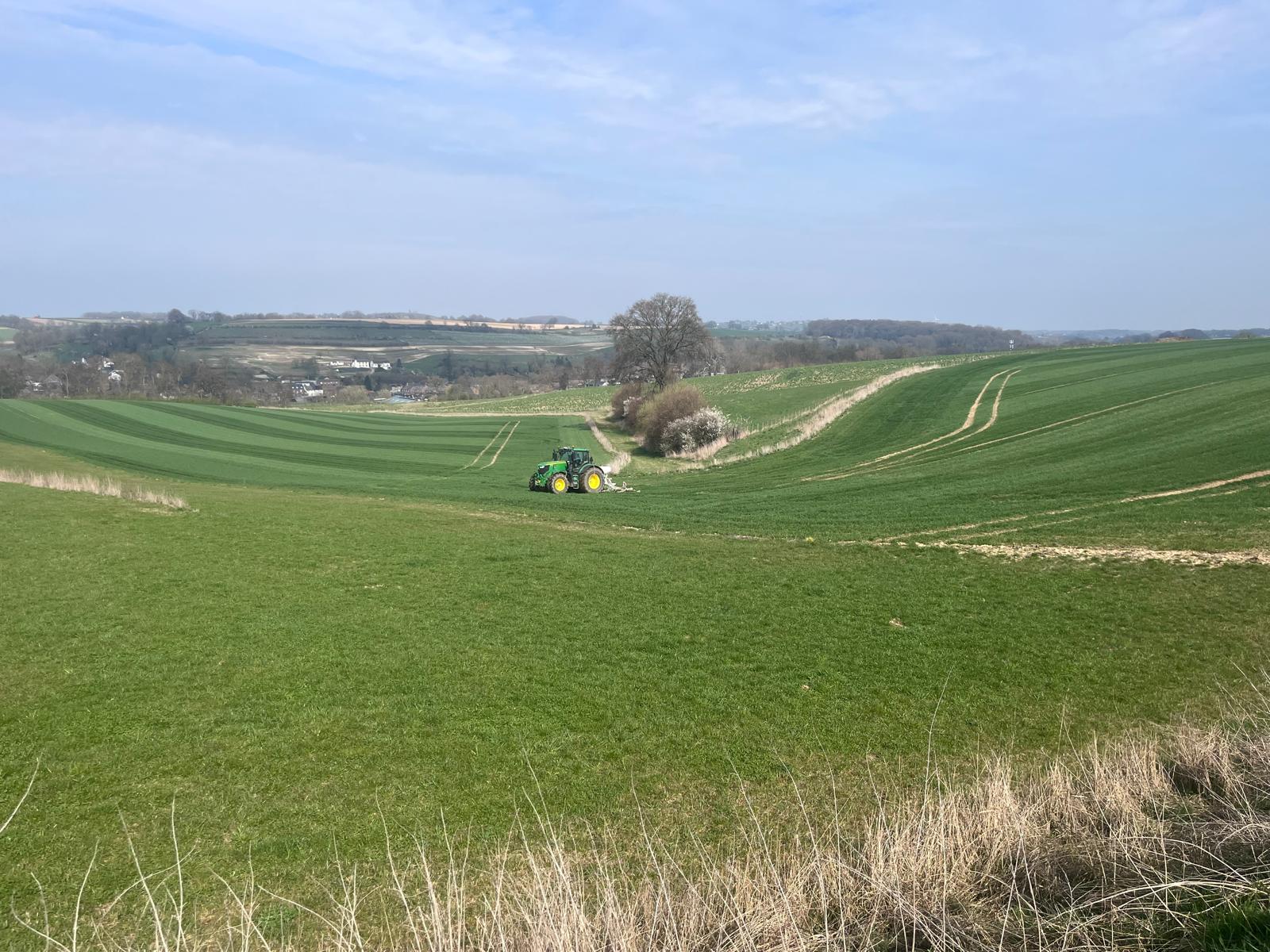
It will still take some time before the wheat in these fields is harvested. However, by carrying out undersowing at the right moment, an important condition for the European hamster can already be secured: providing sufficient cover once the cereals are removed from the field.
After the grain harvest, the undersown crop, in this case clover, quickly develops and provides immediate shelter. This continuity in cover is essential for the hamster, which depends on protection in an otherwise open agricultural landscape.
With this in mind, the ongoing experiment with undersowing in cereals is a promising development within the LIFE Cricetus project.
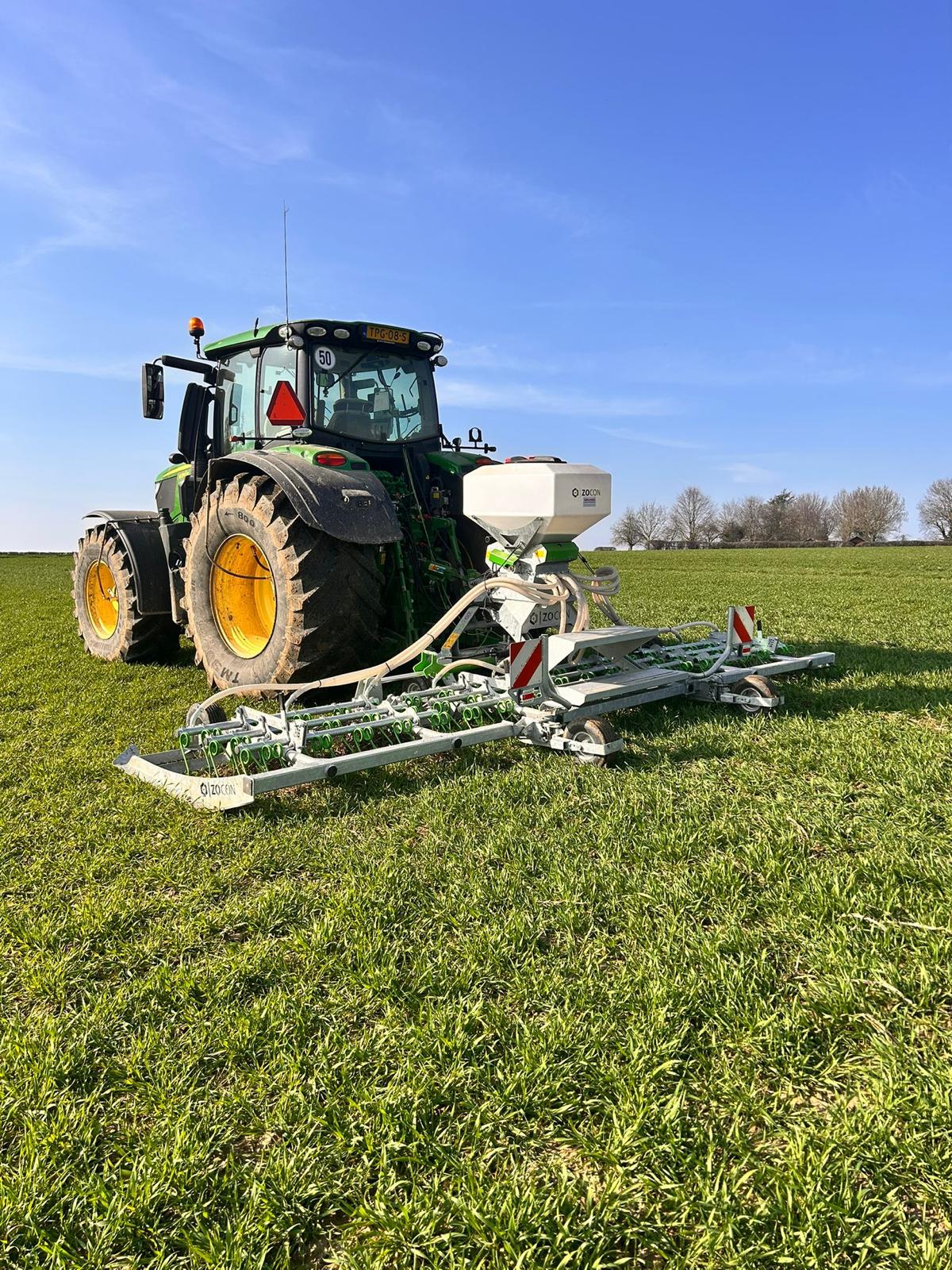
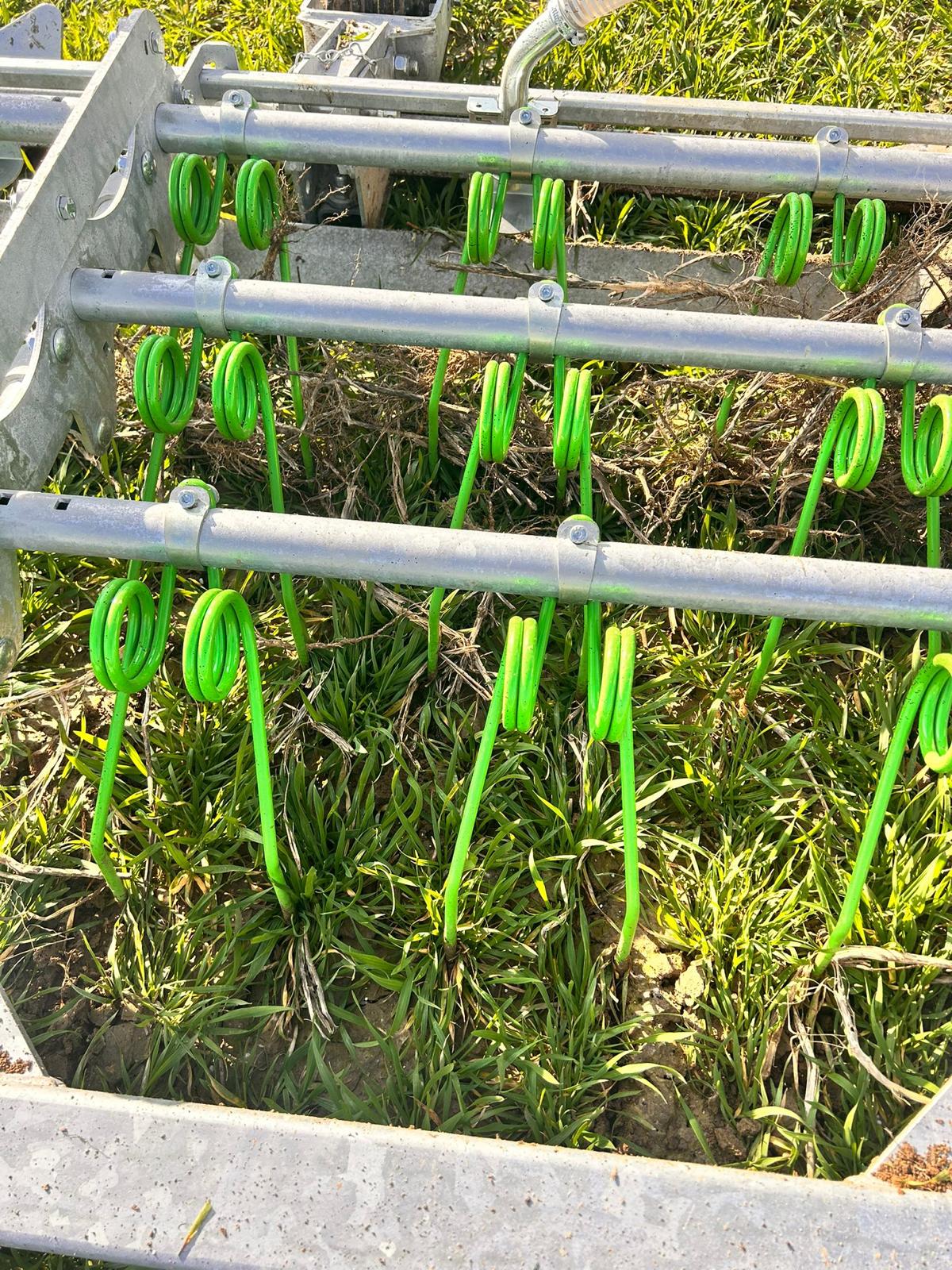
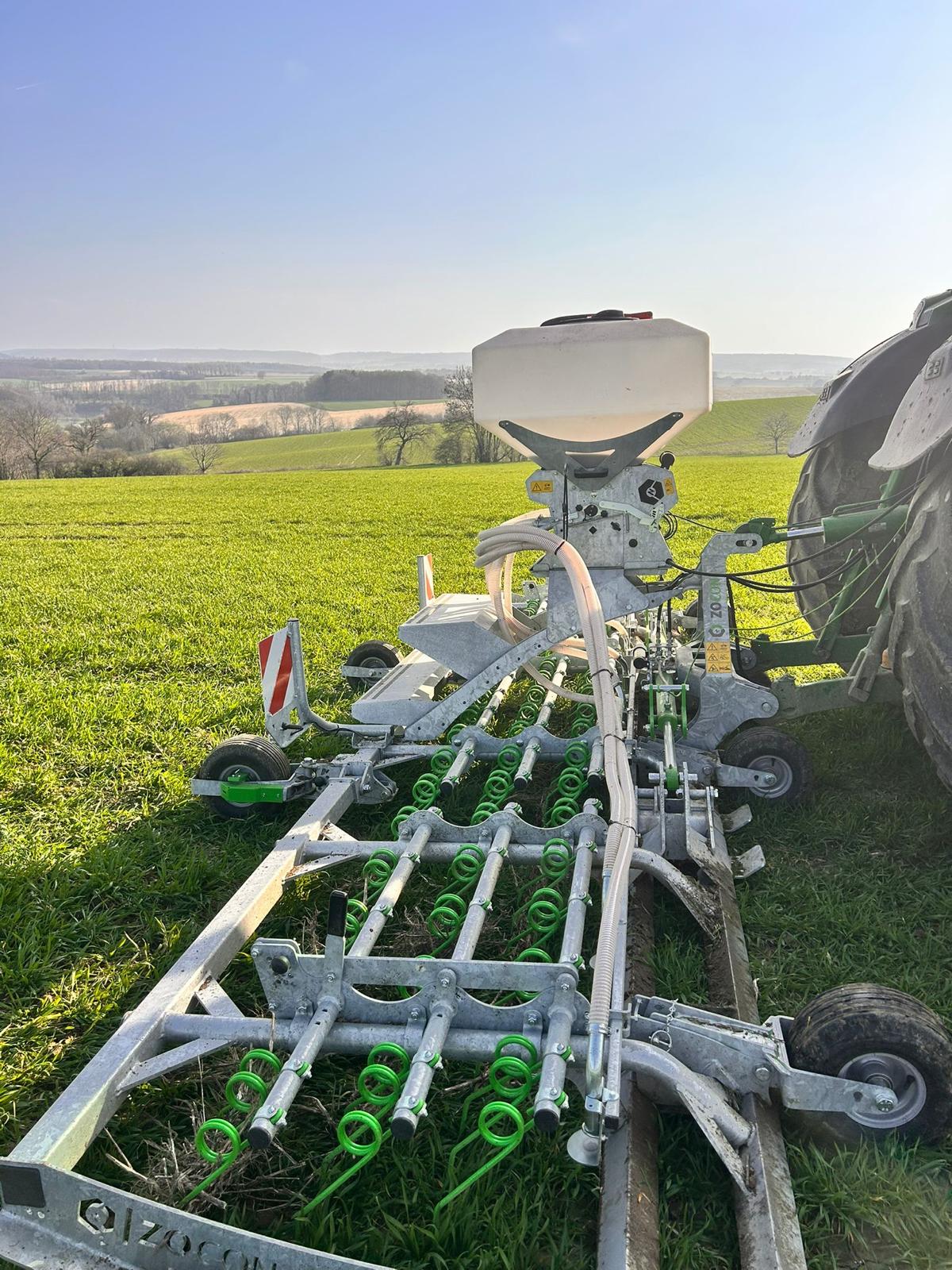
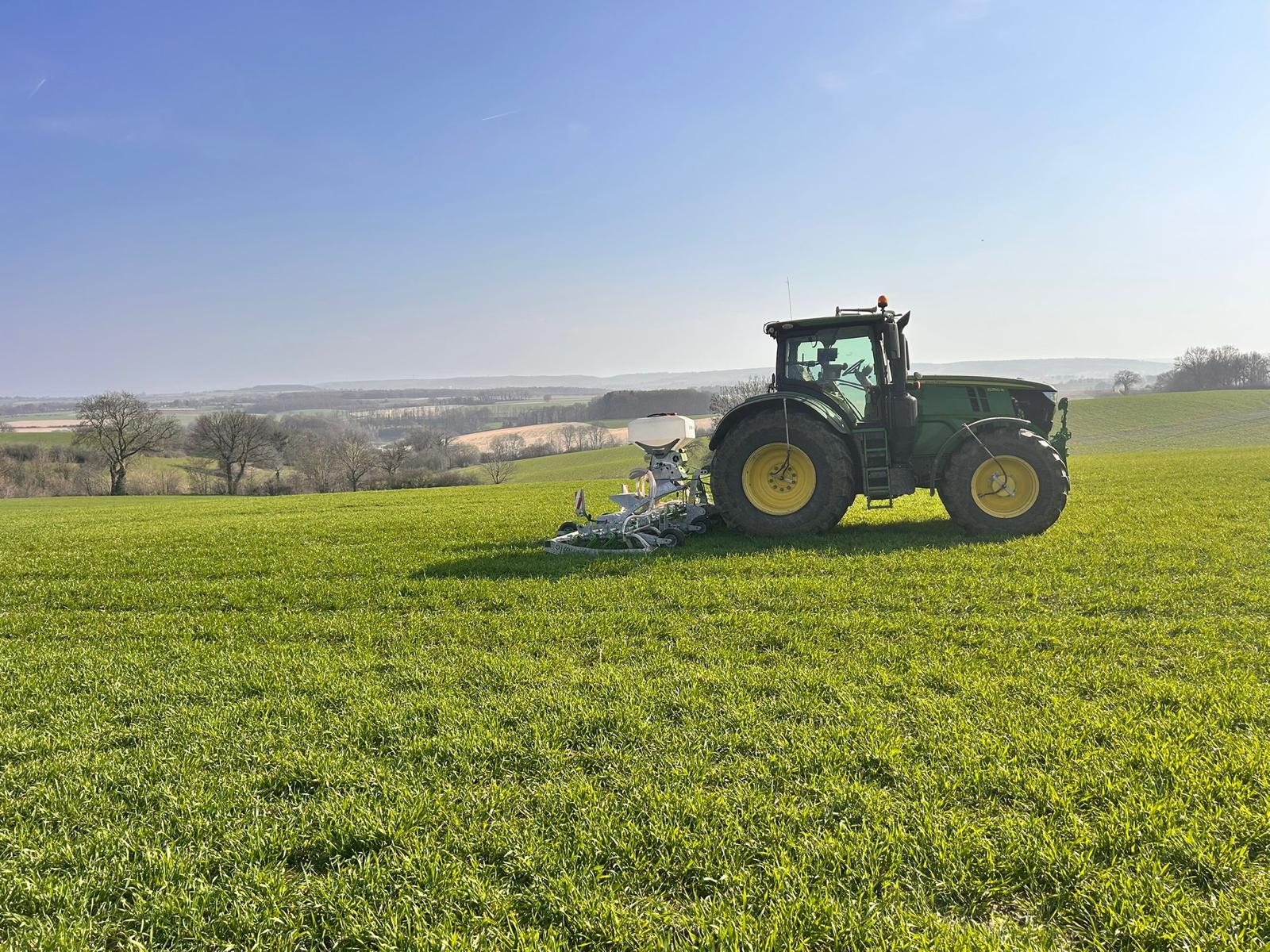
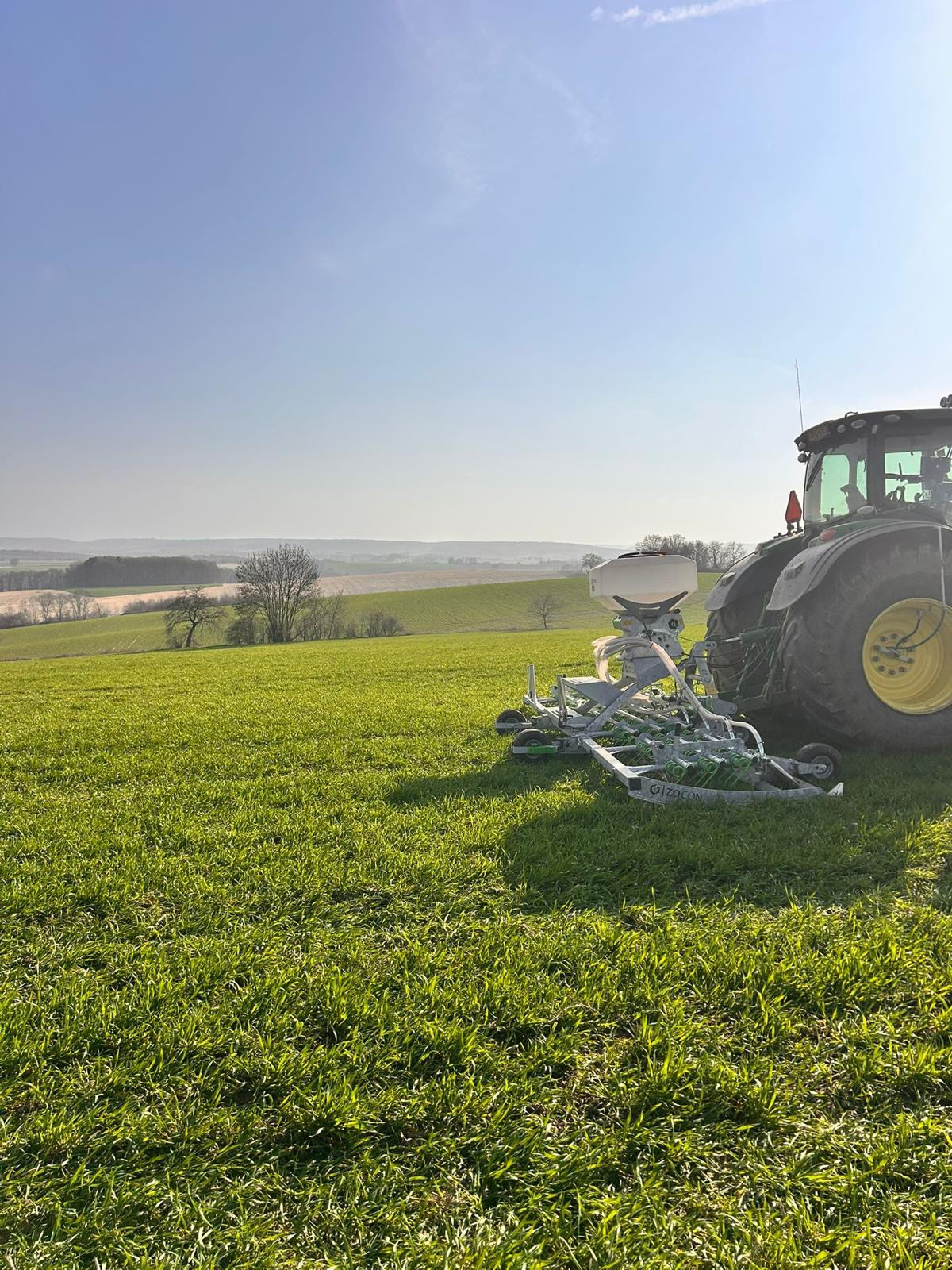
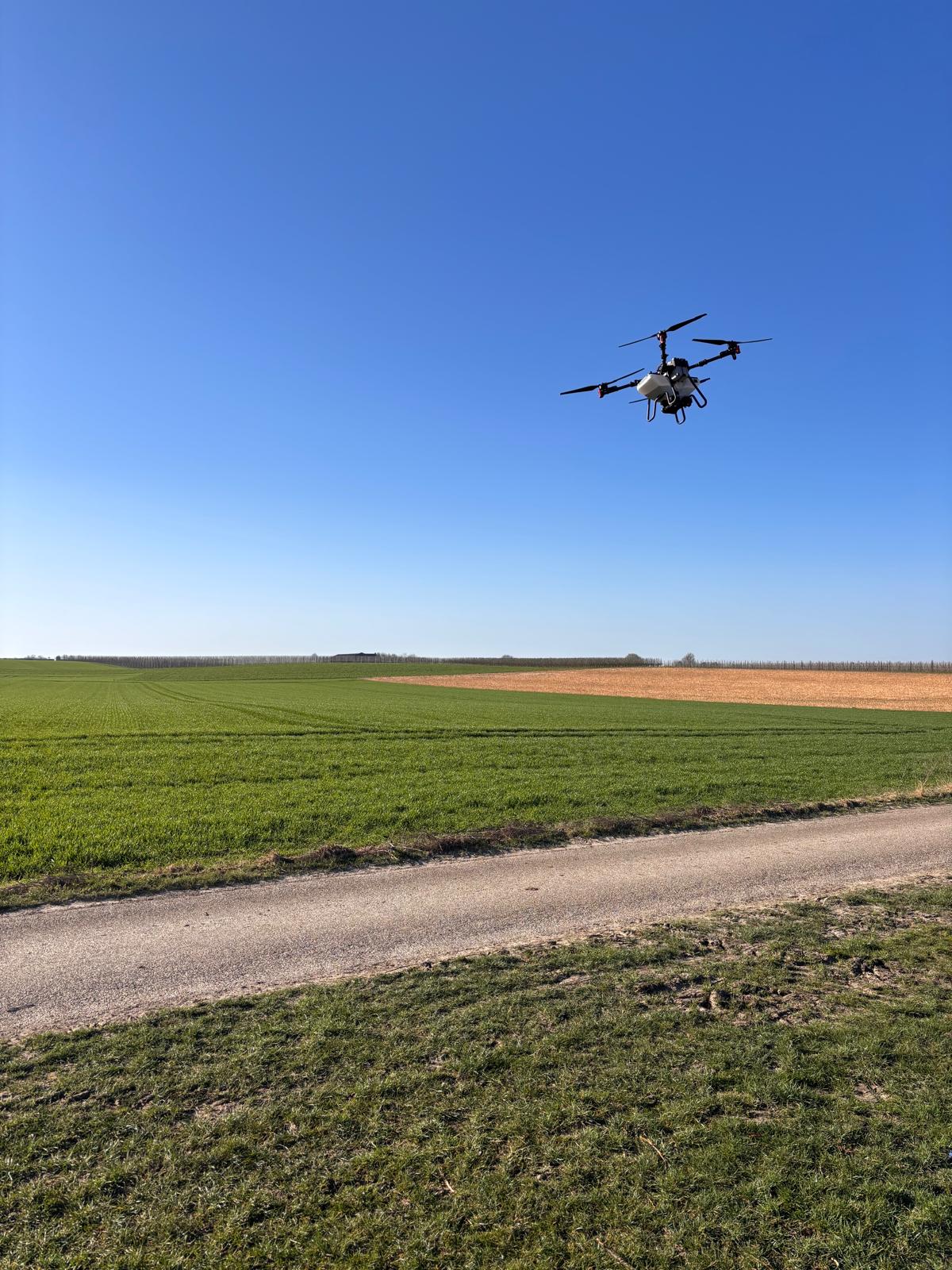
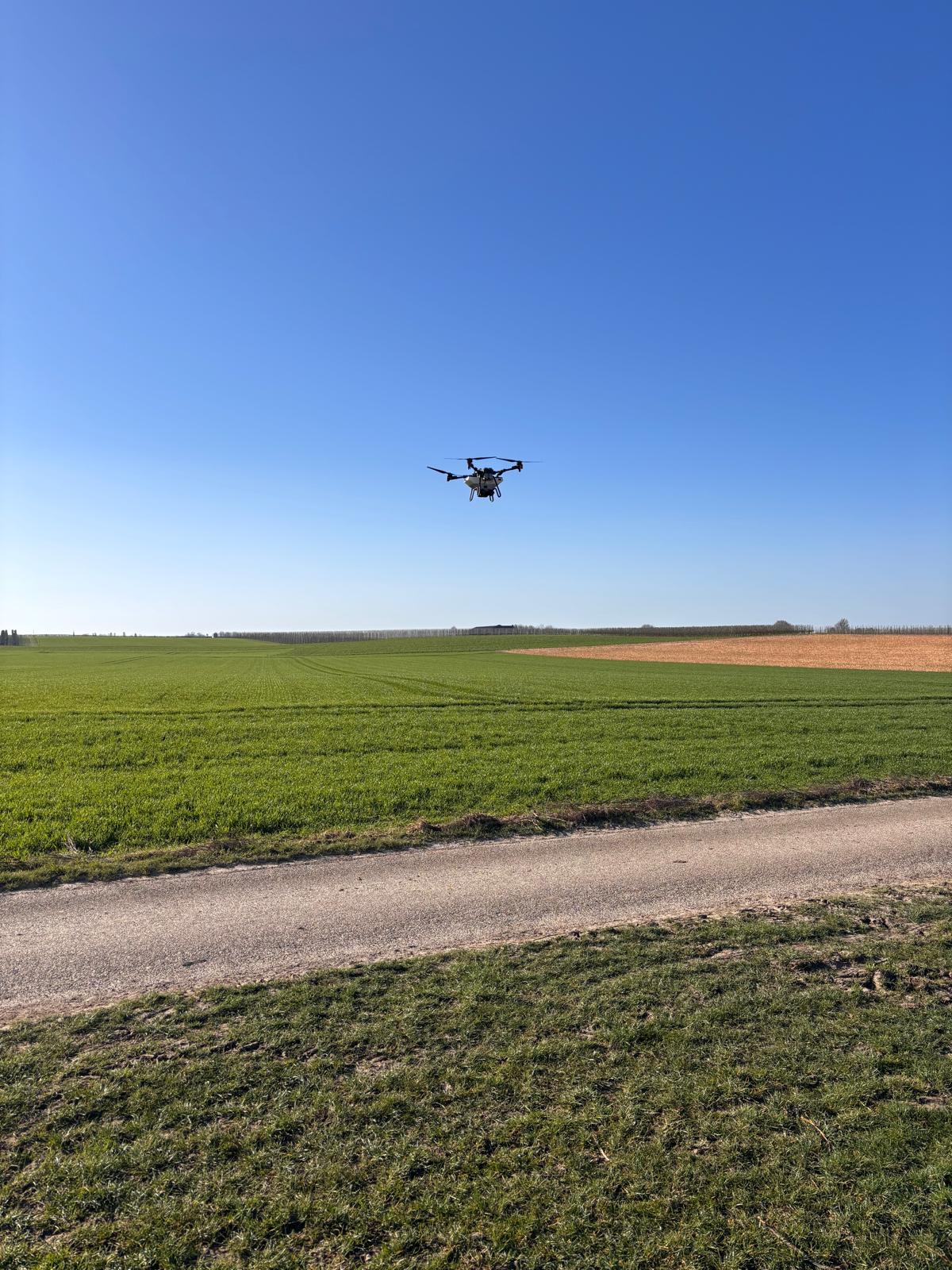
In the photos, different seeding techniques are being used. A seed drill places the seeds between rows using tines to incorporate them into the soil, while a drone broadcasts seeds from above. Clover can germinate easily without incorporation, although sufficient soil moisture over a period of time remains essential for successful establishment. Altogether, this shows that multiple seeding techniques are possible, depending on field conditions and timing.
Together, these approaches highlight how practical field-level decisions can contribute to both productive agriculture and improved habitat conditions.