Piecing together a hamster-friendly cropping plan
 How do you design a cropping plan that benefits both the European hamster and farmers?
As part of LIFE Cricetus, our project partner Stichting Limburgs Landschap has made 15 hectares of its arable nature reserve in Sibbe, the Netherlands, available to test hamster-friendly crop combinations. In mid-September, Stichting Limburgs Landschap, Natuurrijk Limburg, an agricultural advisor and PXL BIO-research came together to develop a suitable cropping plan.
Throughout the project, this area will serve as an experimental farm, where different cropping strategies will be tested to identify practical solutions that benefit both the European hamster and wider farmland biodiversity, while remaining economically viable and feasible within farming practices.
The challenge? Combining crops that provide sufficient food resources and vegetation cover throughout the hamster’s active season, while also considering crop rotation and agricultural feasibility.
 In 2027, different combinations of winter cereals, winter oilseed rape, field beans, and red clover will be tested across several fields. Additional trials will include crops such as white lupin and camelina, while sunflowers will be overseeded into an existing stand of Japanese oats and vetch after winter. Two fields with lucerne (alfalfa) will also be maintained.
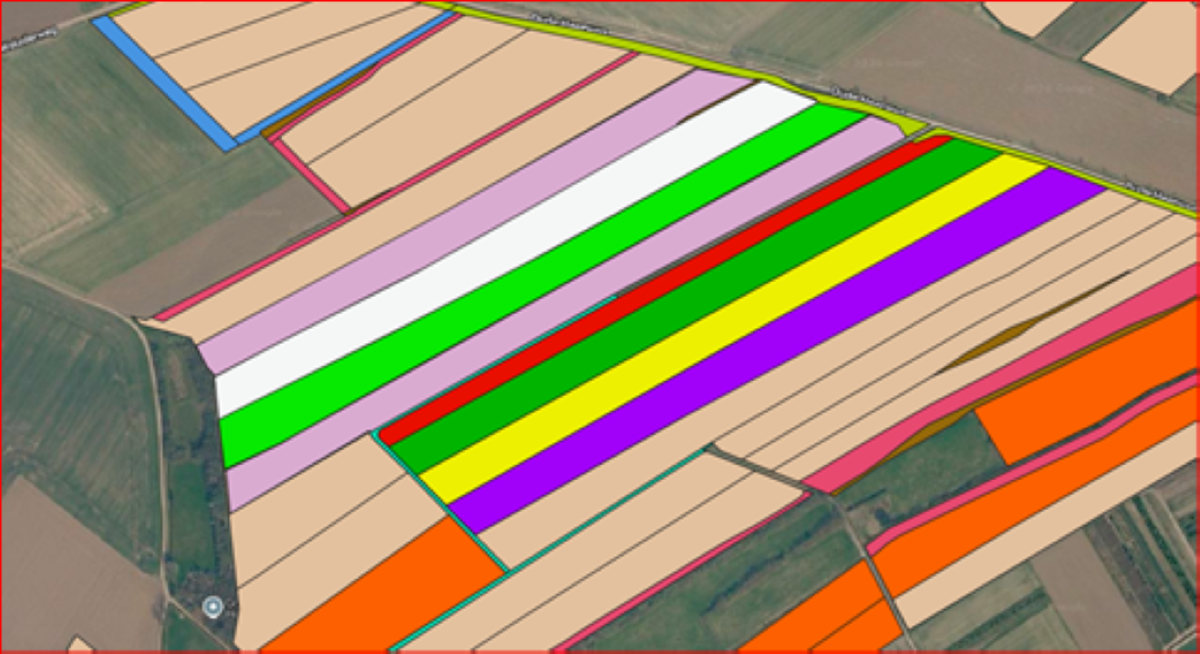
With different fields, crop combinations, and rotation requirements to consider, putting together the right cropping plan is quite a puzzle! The map illustrates this complexity, with each colour representing a different crop combination.
Different crops, one shared goal: creating opportunities for farmers and wildlife that depend on our agricultural landscapes. 

Project partners:
PXL Bio Research, Vlaamse Landmaatschappij (VLM), Boerennatuur VL, Elzéard Foundation, Boerenbond, Natuur en Bos, Agentschap Landbouw en Zeevisserij, Vlaamse Gewest, Natuurrijk Limburg, Het Limburgs Landschap, Zodion Zoogdieronderzoek Nederland, GaiaZOO, Provincie Limburg, Ministerie van Landbouw, Visserij, Voedselzekerheid en Natuur, Biologische Station Bonn / Rhein-Erft e.V. – Naturschutzstation Pullheim (NSP), Biologische Station im Rhein-Kreis Neuss e.V. – Naturschutzstation Rommerskirchen (NSR), LANUK NRW, Ministerium für Umwelt, Naturschutz und Verkehr des Landes NRW, Ministerium für Landwirtschaft und Verbraucherschutz NRW
#FarmlandBiodiversity #LIFECricetus #LIFEprogramme #SustainableAgriculture #CropDiversification #FieldTrials